The Montessori Perspective and the Deep Realities, Challenges, and Possibilities of Bangladesh’s Primary Education System

Primary education forms the foundation of a nation’s education system. At this stage, children do not only learn how to read and write. They also learn how to think, how to ask questions, how to express emotions, and how to live with others. Yet in Bangladesh’s primary education system, this natural and human learning process is often constrained by rigid structures. The pressure to complete the syllabus, conduct examinations, and publish results frequently suppresses children’s curiosity, imagination, and joy of discovery.
When children learn through play, their learning becomes deeper and more meaningful. Questions that emerge during play and interests that grow through exploration leave long lasting impressions on a child’s mind. However, in most primary schools, play is still not fully accepted as a legitimate learning tool. Instead, play is often viewed as a waste of time or a distraction from academic work. Because of this mindset, children often do not get the opportunity to develop their full learning potential.
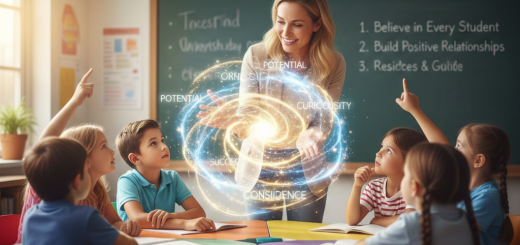
The Montessori philosophy offers a different path at this point. Its central idea is that the child is the core of the learning process. The teacher does not impose knowledge but prepares the learning environment. Children learn based on their interests, learn from their mistakes, and move forward at their own pace. When this philosophy is compared with the realities of primary education in Bangladesh, a major gap in perspective becomes clearly visible.
Children Learn Naturally, Not Through Force
Children at the primary level are at an age where they are eager to explore the world around them. They want to touch things, open objects, and ask questions. This curiosity is the main driving force behind learning. The Montessori approach does not suppress this curiosity. Instead, it nurtures and protects it. When children can do things by themselves, they gain confidence. They learn that learning involves making mistakes, trying again, and gradually becoming skilled.
In contrast, the reality of many primary schools in Bangladesh reflects the opposite approach. Children are expected to complete specific textbooks within fixed timeframes. Listening to the teacher, memorizing content, and reproducing it in exams are treated as the main indicators of success. As a result, children begin to see learning as pressure rather than joy. Gradually, they stop asking questions because questions may waste time or annoy the teacher. This silence is often praised as discipline, but in reality, it signals a loss of learning interest.
Child Centered Education and Bangladesh’s Social Reality
The idea of child centered education is not limited to the classroom. It reflects a broader social mindset. In Bangladeshi society, a good student is often defined as a child who sits quietly, asks few questions, and scores high marks in examinations. Many parents expect their children to learn reading and mathematics as quickly as possible. Learning through play is often seen as unproductive.
This social pressure also affects primary schools. Teachers are aware that if children spend more time playing or learning through hands-on activities, parents may raise concerns. As a result, many teachers hesitate to apply child centered approaches even when they personally believe in them. The Montessori philosophy reminds us that children do not learn at the same pace. Forcing all children into a single mold goes against their natural development.
Classroom Reality and Teacher Student Ratio
One of the major challenges in Bangladesh’s primary education system is the teacher student ratio. When one teacher is responsible for fifty or more children, giving individual attention becomes nearly impossible. According to BANBEIS data, the average teacher student ratio in government primary schools is around one teacher for forty five students. In contrast, the Montessori approach recommends one teacher for fifteen to twenty children. This difference reflects not only a numerical gap but also a fundamental difference in educational philosophy.
Because of the high number of students, teachers are often forced to assign the same tasks to everyone at the same time. It becomes difficult to consider individual learning speeds or interests. Children who learn more slowly fall behind, while faster learners become bored. In both cases, children lose their joy of learning and their confidence declines.
Physical Classroom Environment and Learning Opportunities
The classroom environment plays a critical role in child centered education. In the Montessori approach, the classroom is described as a prepared environment. Children can move freely, choose materials independently, and participate in diverse activities. Such environments are largely absent in most primary schools in Bangladesh.
In rural areas especially, classrooms are small, poorly ventilated, and overcrowded. Children sit tightly packed on benches, facing the board, with limited opportunities to move or explore. Many schools lack basic materials for play based or hands-on learning. As a result, children’s curiosity, imagination, and problem solving abilities gradually weaken.
Teacher Training and Professional Challenges
Teachers are the heart of any education system. However, primary teacher training in Bangladesh still faces significant limitations. Most training programs are subject focused. Emphasis is placed on how to teach textbooks and prepare students for exams. Child centered methods, observation skills, and learning psychology often receive little attention.
According to the UNESCO Global Education Monitoring Report, teachers frequently experience pressure to complete the syllabus. This pressure is combined with administrative tasks, additional responsibilities, and limited social recognition. Salary structures also often fail to motivate professional growth. In this context, teachers hesitate to take risks by adopting new teaching approaches. As a result, classroom relationships often become one directional, where teachers speak and children listen.
Curriculum Structure and Memorization Based Learning
The primary education curriculum in Bangladesh remains largely memorization based. What children must learn is predetermined, while how they learn is given little flexibility. Memorization is widely considered the most effective way to achieve good exam results. Consequently, learning often becomes mechanical.
In Montessori philosophy, the goal of education is holistic child development. Alongside academic knowledge, it values social skills, emotional regulation, self confidence, and independent decision making. When children learn based on interest, discipline does not need to be imposed from outside. It grows from within the child.
Assessment Methods and Their Impact
Assessment methods have a strong influence on how children learn. At the primary level in Bangladesh, exam based assessment still dominates. Success is measured by the ability to answer specific questions within a fixed time. This system creates fear and pressure among children.
In the Montessori approach, assessment occurs through observation. Teachers observe how children work, solve problems, and where they need support. Children become aware of their own learning progress. Without the fear of exams, they do not fear mistakes and develop a positive attitude toward learning.
International Experiences and Lessons
Many countries have adopted Montessori inspired approaches in primary education. In Finland, exam pressure at the primary level is minimal, and play based learning is emphasized. In Japan, group work and social skills development receive strong attention. In Canada, some schools have introduced activity corners and observation based assessment systems.
These experiences show that when children are given opportunities for spontaneous learning, not only academic outcomes but also social and emotional development improve. These examples can inform Bangladesh, not through direct imitation, but through adaptation to local contexts.
Policy Level Actions and Implementation Pathways
To integrate the Montessori perspective into Bangladesh’s primary education system, several steps are necessary. First, teacher training programs must include child centered strategies and learning psychology. Second, classrooms must provide opportunities for hands-on learning and play. Third, the curriculum must become more flexible so both teachers and children can be creative.
Fourth, assessment systems need reform. Alongside exams, observation based evaluation should be introduced. Fifth, parents must be made aware of the value of natural learning processes. Finally, pilot projects in both public and private schools can help evaluate the effectiveness of child centered approaches.
Conclusion
Child centered education is not a luxury. It is a necessity. The Montessori philosophy reminds us that children learn through joy, curiosity, and experience. Forced learning may produce memorization, but it does not develop thinking. Integrating the Montessori perspective into Bangladesh’s primary education system is not merely about adopting a new method. It is about respecting the child as a human being.
This approach can reduce gender inequality, ensure inclusion of disadvantaged children, and allow flexibility based on local needs. In the long term, it can help build a thoughtful, creative, and responsible citizenry. The future of primary education in Bangladesh depends on how we view the child. If we judge children only by exam results, we lose much of their potential. If we grant them their natural right to learn, they will find their own path.