Rethinking Primary Education in Bangladesh Through Inquiry, Agency, and Meaningful Learning

Primary education in Bangladesh stands at a decisive moment. Over the past three decades, the country has made remarkable progress in expanding access to schooling. Enrollment rates have risen. Gender parity has improved. More children are entering classrooms than ever before. Yet behind these achievements lies a persistent concern that educators, parents, and policymakers quietly acknowledge. Many children attend school, but too many leave without deep understanding, confidence, or the ability to apply what they have learned to real life.
In countless primary classrooms across Bangladesh, learning still revolves around memorization. Teachers rush through textbooks to meet syllabus deadlines. Children copy from the blackboard, repeat after the teacher, and prepare for examinations that reward recall rather than understanding. For years, this approach was seen as necessary in a system coping with large class sizes, limited resources, and high stakes assessments. Today, however, the limitations of this model are increasingly visible.
Learning loss following the Covid 19 pandemic exposed deep cracks in the system. Many children returned to school unable to read fluently or perform basic numeracy tasks. Teachers found it difficult to address varied learning levels within the same classroom. Parents worried about their children’s future in a rapidly changing world. At the same time, global and national policy commitments under SDG 4 and the Primary Education Development Program emphasize quality, equity, and lifelong learning. These goals cannot be achieved through rote instruction alone.
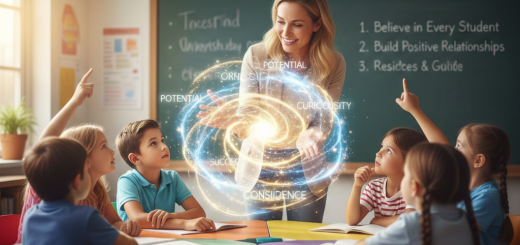
The learning and teaching model illustrated in the image offers a powerful framework for reimagining what primary education in Bangladesh can become. Although developed outside the country, its core principles align closely with both international research and local realities. At its heart lies a simple yet transformative idea. Children learn best when they are active participants in their learning, not passive recipients of information.
This article explores how the ideas reflected in this model can inform and strengthen primary education in Bangladesh. It does not argue for copying another system wholesale. Instead, it invites educators and policymakers to reflect on what meaningful learning looks like in Bangladeshi classrooms and how inquiry, student agency, and reflection can be integrated within existing structures.
The Child at the Center of Learning
For generations, primary education in Bangladesh has been teacher centered. The teacher speaks. Children listen. Knowledge flows in one direction. This structure has historical roots and practical reasons. Large classes make interaction difficult. Teachers are trained to deliver content rather than facilitate discussion. Examinations demand correct answers, not thoughtful questions.
Yet decades of educational research challenge this model. Jean Piaget demonstrated that children do not absorb knowledge passively. They construct understanding by interacting with their environment, testing ideas, and resolving contradictions. When learning is reduced to memorization, children may recall facts temporarily, but they struggle to transfer knowledge to new situations.
The model places the learner at the center, surrounded by qualities such as curiosity, critical thinking, care, open mindedness, and balance. These are not separate lessons taught once a week. They are dispositions developed through everyday classroom experiences. When a child is encouraged to ask why something happens, explain their reasoning, listen to a classmate, or reflect on a mistake, learning becomes deeper and more durable.
In Bangladeshi classrooms, many children hesitate to speak. Fear of making mistakes, rigid discipline, and social hierarchies often silence them. Girls, children with disabilities, and those from poor households are particularly affected. A learner centered approach challenges this silence. It sends a clear message that every child’s thinking matters.
Lev Vygotsky emphasized that learning occurs through social interaction. Children learn best when guided by teachers and peers within what he called the zone of proximal development. In practical terms, this means that teachers need to engage with children’s ideas, not just correct their answers. A wrong answer becomes an opportunity for discussion, not punishment.
Creating such an environment does not require expensive materials or small class sizes. It requires a shift in mindset. When teachers see children as thinkers rather than empty vessels, classrooms begin to change.
Learning Through Big Ideas, Not Isolated Facts
One of the most powerful elements of the model is its emphasis on broad, meaningful themes. Instead of teaching subjects as isolated blocks of information, learning is organized around big ideas such as identity, time, expression, systems, and shared responsibility.
This approach holds particular relevance for Bangladesh. Children grow up surrounded by complex realities. Floods and cyclones shape their lives. Migration affects families. Social norms influence gender roles. Economic inequality is visible in every community. Primary education should help children make sense of these realities, not shield them from them.
Consider environmental education. Traditionally, children memorize definitions of rivers, weather, and pollution. They may score well on exams but fail to connect these ideas to their lived experiences. An inquiry based approach begins with children’s observations. Why does our village flood every year? Why is the pond water changing color? What happens when waste is thrown into canals?
These questions lead naturally to scientific concepts, social studies, and civic responsibility. Children learn content, but they also develop critical awareness. Paulo Freire argued that education should help learners read the world, not just the word. When learning connects to real life, it becomes meaningful.
Bangladesh’s national curriculum already includes themes related to environment, citizenship, and culture. The challenge lies in implementation. Teaching through themes requires teachers to slow down, ask open ended questions, and allow time for exploration. This may feel risky in a system driven by examinations. Yet evidence shows that children who understand concepts deeply perform better in the long run, even on traditional assessments.
Inquiry as the Heart of Learning
At the core of the model lies an inquiry cycle. Learning begins by connecting with what children already know. It moves through exploration, organization of ideas, conclusion making, and action. This cycle mirrors how humans naturally learn.
In many Bangladeshi classrooms, lessons begin with definitions from the textbook. Children are rarely asked what they already know or think. As a result, misconceptions remain unaddressed. Inquiry based learning starts differently. A teacher might ask children to share experiences, draw pictures, or discuss in pairs. These simple strategies reveal prior knowledge and spark curiosity.
Finding out does not require advanced technology. Observation, storytelling, interviews, simple experiments, and local resources can all support inquiry. Sorting out ideas helps children see patterns and relationships. Making conclusions encourages them to articulate understanding in their own words.
The final stage, taking action, is often missing in traditional classrooms. Learning ends with exams. Inquiry based learning insists that knowledge should lead to action, however small. A class might create awareness posters, improve classroom hygiene, or share learning with parents. These actions reinforce learning and build a sense of responsibility.
This approach aligns closely with competency based education, which Bangladesh has committed to under SDG 4. Competencies involve knowledge, skills, values, and attitudes. They cannot be developed through memorization alone.
Student Agency and Educational Equity
The model emphasizes student agency through voice, choice, and ownership. In simple terms, this means giving children opportunities to express ideas, make decisions, and take responsibility.
In Bangladesh, where respect for authority is deeply ingrained, this idea may raise concerns. Some fear that giving children voice will lead to disorder or loss of discipline. In practice, the opposite is often true. When children feel respected, they are more engaged and responsible.
Voice can begin with small steps. Allowing children to share opinions during lessons. Encouraging questions. Listening without immediate judgment. Choice can involve selecting topics, materials, or group roles. Ownership grows when children see their efforts valued.
Student agency is not only a pedagogical issue. It is a matter of equity. Marginalized children often experience school as a place where they have little control. Giving them voice counters exclusion. It builds confidence and belonging.
Research shows that children who experience agency develop stronger motivation and resilience. These qualities are essential in a country where many children face economic hardship and social barriers.
The Role of Teachers as Facilitators of Learning
Inquiry based learning does not reduce the importance of teachers. It redefines it. Teachers become facilitators, guides, and designers of learning experiences.
This shift requires support. Many primary teachers in Bangladesh work under difficult conditions. Large class sizes, administrative duties, and limited training leave little time for reflection. Expecting teachers to transform practice without support is unrealistic.
Professional development must focus on practical strategies. How to ask open ended questions. How to manage group work in crowded classrooms. How to assess learning beyond exams. Peer learning, mentoring, and school based training can play a vital role.
The Primary Education Development Program recognizes the importance of teacher development. The challenge is ensuring that training reaches classrooms and supports real change, not just compliance.
Learning Beyond the Classroom
The model reminds us that learning does not end at the classroom door. Action and reflection connect school with community.
Bangladesh has a rich tradition of community involvement in education. Parents, local leaders, and NGOs play important roles. Inquiry based projects can strengthen these connections. Children might interview elders, document local history, or address community issues.
Bronfenbrenner’s ecological theory emphasizes that child development is shaped by multiple systems. School, family, and community must work together. When learning reflects children’s social context, it becomes more meaningful and inclusive.
Aligning Policy, Practice, and Purpose
Bangladesh’s education policies emphasize quality, equity, and relevance. The challenge lies in translating these goals into classroom practice. Inquiry based learning offers a pathway.
This does not require abandoning examinations overnight. It requires rebalancing priorities. Understanding alongside coverage. Thinking alongside recall. Action alongside assessment.
The future of Bangladesh depends on a generation that can think critically, collaborate, and adapt. Primary education lays the foundation. If classrooms continue to prioritize rote learning, children will struggle to meet future challenges.
A Way Forward
The model presented in the image is not a prescription. It is an invitation. An invitation to reflect on what learning should look like for Bangladeshi children.
Change will not happen overnight. It will require patience, support, and trust in teachers and learners. Small steps matter. A question asked. A discussion encouraged. A project shared.
Education is not only about preparing children for exams. It is about preparing them for life. When primary classrooms nurture curiosity, responsibility, and understanding, they contribute not only to individual success, but to national development.
Bangladesh has shown that it can achieve ambitious goals in education. The next chapter must focus on depth, dignity, and meaning in learning. Inquiry based education offers a promising path toward that future.