Why Children Fear Mathematics and How We Can Heal That Fear
Introduction
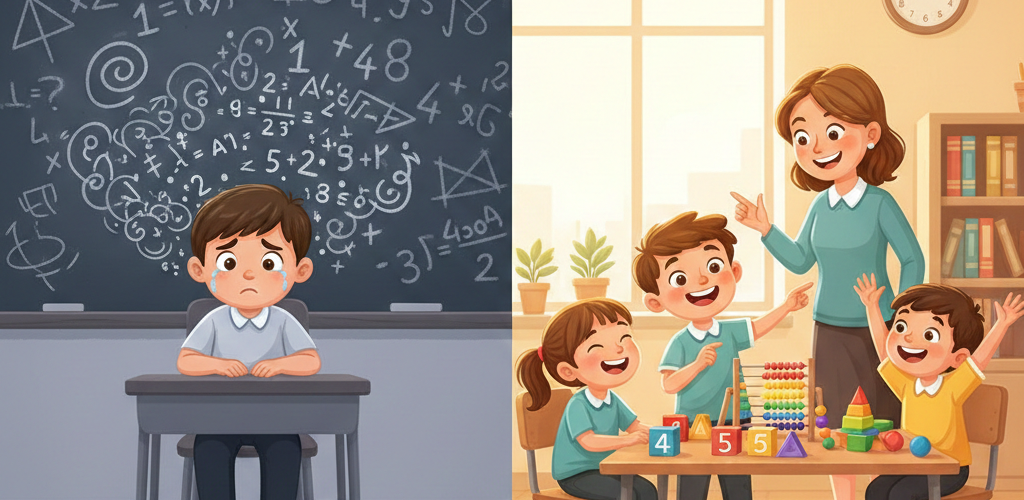
In primary schools across Bangladesh, mathematics is one of the most feared subjects. Many children show anxiety, avoidance, and even physical discomfort when math class begins. We often see students becoming silent, nervous, or restless when numbers appear on the board. This fear does not come from mathematics itself. It comes from how mathematics is taught, assessed, and discussed around children.
Mathematics is not meant to be frightening. It is meant to build reasoning, confidence, and problem solving skills. Yet for many Bangladeshi children, math becomes a source of stress very early in life. This fear grows quietly from class one and class two. By the time a child reaches class five, many already believe that they are not good at math.
This article explores why students fear mathematics and how that fear can be reduced at the primary level in Bangladesh. It is written for teachers, parents, school leaders, trainers, and education development workers who want to build confident learners, not fearful ones.
The ideas are based on classroom realities, child psychology, and proven educational practices. The goal is simple. Help to create a learning environment where children feel safe, supported, and capable when learning mathematics.
Understanding Math Anxiety in Primary School Children
Math anxiety is a feeling of fear, tension, or nervousness that interferes with a child’s ability to learn or perform mathematics. In primary education, this anxiety often shows up in subtle ways:
- A child may avoid raising their hand.
- A child may say they feel sick during math class.
- A child may freeze during a test even when they know the answers.
- A child may repeat negative self-talk like “I am bad at math”.
Research in child development shows that early math anxiety can affect memory, attention, and confidence. When a child feels anxious, the brain focuses on fear instead of thinking. This makes problem solving harder, even for simple tasks.
In Bangladesh, where classroom sizes are large and exam pressure is high, math anxiety becomes more common and more harmful if not addressed early.
Pressure and Time Limits in Primary Classrooms
One major cause of math fear is pressure created by time bound testing. Many primary schools emphasize speed over understanding. Children are expected to finish worksheets quickly. Teachers often say “hurry up” or “time is almost over”.
For a young child, this creates panic. The child starts worrying about time instead of thinking about the problem. Even confident students may make mistakes under pressure.
In Bangladesh, primary students often face weekly tests, monthly tests, and model tests. These assessments are sometimes treated as judgments rather than learning tools. When a child fails to finish on time, they feel embarrassed or ashamed.
Instead of building skill, timed tests can send a message that being slow means being weak. This belief stays with children for years.
At the primary level, learning speed varies widely. Some children need more time to think. That does not mean they are less capable. When we reduce time pressure, many children perform better and feel calmer.
Fear of Failure and Judgment
Children are highly sensitive to how adults react to their mistakes. In many classrooms, wrong answers are treated as failures. Sometimes teachers scold students. Sometimes classmates laugh. Sometimes parents compare children with others.
This creates a deep fear of being judged.
In Bangladesh, cultural attitudes often link academic success with self worth. Children quickly learn that making mistakes leads to criticism. As a result, they stop trying. They avoid answering questions. They prefer silence over risk.
Fear of failure blocks learning. A child who is afraid to be wrong will not explore new ideas. Mathematics requires trial and error. Without emotional safety, real understanding cannot develop.
When children worry more about humiliation than learning, math becomes emotionally painful. This pain gets attached to numbers, formulas, and exams.
Negative Influences from Adults
Many adults unknowingly pass their own math anxiety to children. We may hear parents say “I was also bad at math” or “math is very hard”. Teachers may say “only some students are good at math”.
These statements shape children’s beliefs. When a trusted adult expresses fear or dislike for math, a child learns that math is something to avoid.
In Bangladesh, many parents did not receive supportive math education themselves. Their experiences may include harsh discipline, rote memorization, and public shaming. Without realizing it, they repeat the same patterns at home.
Children listen carefully to adult language. When we say “math is difficult”, children hear “math is scary”. When we say “only intelligent students understand math”, children think “I must not be intelligent”.
Changing adult attitudes is one of the most powerful ways to reduce math anxiety in children.
Poor Instruction and Abstract Teaching
Another major cause of math fear is how mathematics is taught. In many primary classrooms, teaching relies heavily on memorization. Children are asked to remember formulas without understanding their meaning.
Abstract concepts are introduced too early without concrete examples. Teachers often follow textbooks strictly, focusing on finishing the syllabus rather than ensuring understanding.
For young children, abstract numbers without context feel confusing and meaningless. When children do not understand, they feel lost. Repeated confusion turns into fear.
In Bangladesh, limited teaching resources and large class sizes make hands on learning difficult. However, even small changes in teaching approach can make a big difference.
When math feels disconnected from real life, children struggle to see its value. They begin to believe that math is only about right or wrong answers, not thinking or creativity.
Symptoms of Math Anxiety in Children
Math anxiety shows itself both emotionally and physically like:
- Emotionally, children may show
- Avoidance of math activities
- Low confidence
- Negative self talk
- Fear of tests
- Physically, children may experience
- Sweating
- Stomach pain
- Headache
- Rapid heartbeat
Cognitively, anxiety affects memory and attention. A child may forget steps they already know. They may struggle to focus. This creates a cycle where anxiety causes poor performance, which increases anxiety further.
Teachers and parents need to recognize these signs early. Math anxiety is not laziness or lack of intelligence. It is a learned emotional response.
Cultivating a Growth Mindset in Primary Education
One of the most effective ways to overcome math anxiety is by developing a growth mindset. A growth mindset is the belief that abilities can improve through effort, practice, and learning.
When children believe that intelligence is fixed, they give up easily. When they believe that effort leads to improvement, they persist.
In primary classrooms, teachers play a key role in shaping mindset. Simple language changes can have powerful effects like:
- Instead of saying “You are smart”, say “You worked hard”.
- Instead of saying “Wrong answer”, say “Let us try a different way”.
- Instead of saying “This is easy”, say “This may take practice”.
In Bangladesh, where academic labeling starts early, promoting a growth mindset helps reduce fear and build resilience.
Mistakes should be treated as learning opportunities. When children see mistakes as normal, fear loses its power.
Creating a Collaborative and Supportive Learning Environment
Children learn best when they feel supported by peers and teachers. Collaborative learning reduces fear because children do not feel alone.
Group work allows students to share ideas, explain thinking, and learn from each other. It shifts focus from competition to cooperation.
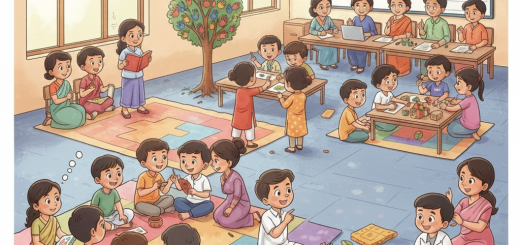
In Bangladeshi classrooms, group activities can be simple. Pair work, small discussion circles, or problem solving teams work well even in limited space.
Teachers should encourage questions and curiosity. When a child asks a question, it should be welcomed, not dismissed.
A supportive environment sends a clear message. Learning matters more than performance. Understanding matters more than speed.
Expressive Writing and Emotional Reframing
Young children may not always express anxiety clearly. Giving them ways to express feelings helps reduce stress.
Simple reflective activities can be introduced. Children can draw how they feel about math. They can write short sentences like “Math makes me feel happy” or “Math makes me feel worried”.
Teachers can guide children to reframe negative thoughts. For example:
- “I cannot do this” becomes “I cannot do this yet”
- “I am bad at math” becomes “I am learning math”
In Bangladesh, where emotional education is often overlooked, such practices help children build emotional awareness and resilience.
Even a few minutes of calm breathing or reflection before math class can improve focus and confidence.
Regular Low Pressure Practice
Confidence grows through practice, not pressure. Short, frequent practice sessions help children learn without feeling overwhelmed.
Games, puzzles, and storytelling can make math enjoyable. When learning feels playful, fear decreases naturally.
In primary education, assessment should support learning, not punish mistakes. Low stakes quizzes, open book activities, and oral discussions reduce anxiety.
In Bangladesh, teachers can use local examples like markets, rickshaw fares, and daily household activities to teach math concepts.
When math becomes part of everyday life, it feels less threatening and more meaningful.
Role of Teachers in Reducing Math Anxiety
Teachers are the most influential figures in a child’s learning experience. Your attitude toward math shapes how children feel about it.
We can reduce math anxiety by:
- Using positive language
- Encouraging effort over results
- Allowing mistakes
- Providing clear explanations
- Being patient
Professional development programs in Bangladesh should include training on emotional aspects of learning, not only content delivery.
When teachers feel confident and supported, they can support children better.
Role of Parents in Building Math Confidence
Parents are children’s first teachers. What we say at home matters deeply.
We can help by:
- Avoiding negative statements about math
- Encouraging effort
- Helping with homework patiently
- Celebrating small improvements
We do not need to be good at math to support our child. Showing interest and positivity is enough.
In Bangladesh, parental awareness programs can help families understand how emotional support improves learning outcomes.
Policy and System Level Considerations
Reducing math anxiety requires systemic support. Curriculum design, assessment policies, and teacher training all play roles.
Primary education in Bangladesh should prioritize understanding over memorization. Exams should assess reasoning, not speed alone.
Teacher training institutions should include child psychology and emotional learning components.
Schools should create safe spaces where children feel valued beyond grades.
Long term change happens when systems support human centered education.
Conclusion
Fear of mathematics is not a child’s fault. It is a result of pressure, judgment, poor instruction, and negative beliefs.
The good news is that math anxiety can be reduced. With supportive teaching, positive language, and safe learning environments, children can develop confidence and curiosity.
In the context of Bangladesh, primary education is the foundation of future learning. When we help children feel safe with mathematics early on, we open doors to lifelong learning and opportunity.
Mathematics is not about fear. It is about thinking, exploring, and growing.
When we change how math feels, we change how children see themselves.
And that change begins with you.