Promoting Creativity in Primary Education in Bangladesh
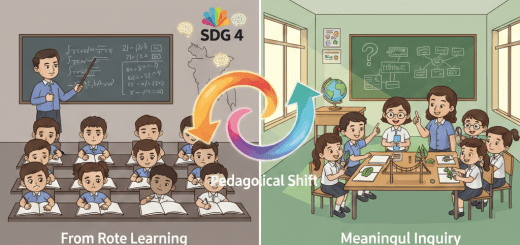
Creativity is one of the strongest foundations for quality learning. When children think freely, imagine new ideas, and express themselves with confidence, they develop the skills they need for their future. In Bangladesh, primary education still focuses heavily on memorisation. Children often learn from fixed textbooks, follow strict instructions, and complete the same tasks in the same way. This limits their natural curiosity and reduces their motivation to explore.
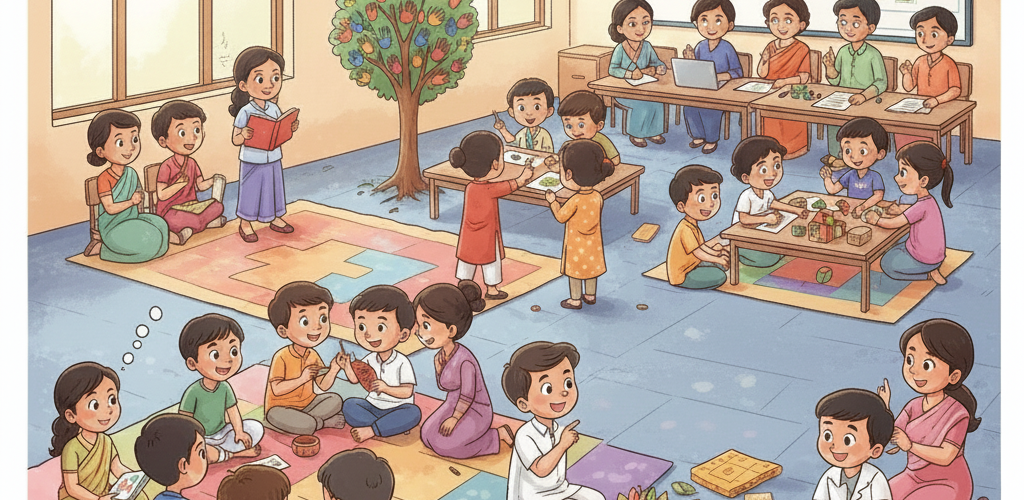
If schools want to prepare children for tomorrow’s world, creativity must be treated as a core part of learning. This means giving children space to think, create, express, ask questions, and solve problems. The following discussion explains why creativity is important and how teachers can bring it into the classroom through storytelling, drawing, role-play, project based activities, and supportive guidance that celebrates diverse ideas.
The importance of creativity in primary learning
You see the early years as the time when children shape their habits, interests, and confidence. When they imagine new things, try different methods, and share their thoughts freely, they build important skills. These include communication, decision making, problem solving, emotional understanding, and social awareness. Research shows that children who get creative opportunities show better learning outcomes in reading, writing, and mathematics. They also become more confident in group activities and learn to accept different points of view.
Creativity also reduces fear. Many children in Bangladesh worry about making mistakes. They believe the teacher will scold them or their answer will be marked wrong. But a creative classroom turns mistakes into learning moments. When children know they can try again and explore alternatives, they become more active in their learning. This mindset helps them far beyond school.
Storytelling as a tool for creative learning
Storytelling is a powerful method because it connects imagination with language. When children hear or create stories, they picture characters, places, and events. This builds their vocabulary, strengthens listening and speaking skills, and improves reading comprehension.
Teachers can use storytelling in different ways:
Daily story circles
You can begin the day with a short story session. The teacher reads a small story and then asks simple questions. What did you like? What would you change? If you were the character, what would you do? These questions encourage children to think and express their view without fear.
Student created stories
Students can create their own stories in small groups. One child starts with a sentence. The next child continues. This activity teaches cooperation and spontaneous thinking. Children enjoy hearing how their stories change with each new idea.
Linking stories to real life
When stories connect with daily experiences, children relate more deeply. For example, a story about a child helping an elderly person can lead to a class discussion on kindness. A story about a river can lead to conversation about the environment and hygiene. This builds moral values without pressure.
Using local stories
Bangladesh has rich folk tales, poems, and characters. Teachers can use stories from Thakurmar Jhuli or stories related to villages, rivers, and festivals. This helps children value their culture while developing imagination.
Drawing and visual expression
Drawing is one of the easiest ways for children to express creativity. Even children who struggle with reading or speaking can express their understanding through pictures. Visual expression strengthens observation skills, motor coordination, and emotional awareness.
Teachers can use drawing to support learning across subjects.
Drawing what they learn
Instead of only writing answers, children can draw plant parts, shapes, or scenes from a story. This supports understanding better than memorisation.
Free drawing time
A few minutes each week can be dedicated to free drawing. Children can draw anything they feel. This builds confidence and helps teachers understand student thinking and emotions.
Collaborative drawing
Large chart papers can be used for group drawings. Each child contributes a small part. This helps build teamwork and communication skills.
Displaying student artwork
When you display drawings in the classroom, children feel valued. It boosts self esteem and encourages active participation.
Role play to strengthen communication and social understanding
Role play is a practical way for children to learn communication, empathy, and social behaviour. When children act as teachers, doctors, shopkeepers, or characters from books, they explore different situations. They practice speaking, listening, and problem solving in real life contexts.
Teachers can introduce role play through simple activities.
Mini dramas
Short scenes based on textbook stories or daily situations allow children to act out emotions and actions. It builds confidence and helps shy children participate.
Learning through community roles
Children can pretend to run a small shop, visit a village health worker, or solve a school issue. This makes their learning practical and meaningful.
Conflict resolution practice
Role play can also help children learn ways to solve problems peacefully. For example, two students arguing over a toy can act out how to negotiate and share.
Costume free and simple
It is important to keep role play easy. Teachers do not need costumes or props. Children can use simple objects or imagine the setting. This keeps the focus on expression.
Project based learning for deeper understanding
Project based learning allows children to investigate a topic, ask questions, collect information, and create something meaningful. It is a powerful approach that builds critical thinking and supports teamwork.
Teachers can introduce small projects without complicated materials.
Theme based projects
A project on plants can include collecting leaves, drawing parts of plants, and sharing personal experiences. A project on community helpers can include interviews of local shopkeepers or village elders.
Group based activities
Students can work in teams to create charts, short presentations, or small models. This improves cooperation and communication.
Use of local materials
Teachers can encourage using paper, clay, leaves, recycled items, and natural materials. This helps children understand sustainability and creativity at the same time.
Presentation time
When students present their work, they practice speaking in front of others. It builds confidence and gives them a sense of achievement.
Giving freedom for expression with gentle guidance
Creativity grows when children feel safe to share ideas. Teachers must create an environment where every child can speak, draw, or act without fear. Increased freedom does not mean lack of structure. Children need supportive guidance that helps them move in the right direction.
Teachers can practice the following approaches.
Asking open ended questions
Instead of asking Who is the hero of the story the teacher can ask What do you think about the main character This helps children think beyond fixed answers.
Encouraging multiple solutions
There can be more than one correct answer. When teachers accept different ideas, children feel encouraged to think more deeply.
Giving time to think
Some children need a little more time to express. A patient atmosphere helps everyone participate.
Using supportive language
Teachers can say I like your idea or That is an interesting thought. This builds confidence and removes fear.
Celebrating diverse ideas and solutions
A creative classroom values different ideas because each child has unique experiences and perspectives. Celebrating diversity helps children understand that all opinions matter.
Teachers can create this culture through simple practices.
Showcasing different work
Teachers can display writing, drawings, and projects from different students, not only the best ones.
Sharing ideas in groups
Group activities give children the chance to learn from their friends. They hear new ideas and understand different viewpoints.
Positive feedback
Children should receive feedback that highlights strengths before discussing improvement areas. This motivates them to try new things.
Respecting cultural backgrounds
Bangladesh has diverse traditions and languages. Teachers can encourage children to share stories or songs from their families. This builds pride and helps others learn respect.
The role of teachers and parents in building creative children
Teachers play the central role in shaping creative classrooms. They need training in child psychology, creative teaching methods, and positive discipline. Schools should encourage teachers to experiment with new approaches and share good practices with each other.
Parents also have a role. They can let children observe daily work, join in small household activities, and ask questions. When parents listen to children’s stories, drawings, and ideas, children feel more confident and supported.
Challenges in Bangladesh and simple ways to overcome them
Bangladesh faces several barriers in promoting creativity. Large classrooms, limited materials, pressure for exams, and lack of teacher training are common challenges. But even within these limitations, meaningful change is possible.
Teachers can reduce lecture time and increase student engagement through group work. They can use locally available materials rather than expensive tools. A positive environment does not require money, only mindset. If teachers and parents shift towards encouraging participation instead of memorisation, the entire learning experience becomes richer.
A way forward for policy and practice
To build creative children across the country, the education system must focus on training, curriculum reform, and school culture. Teacher training programs should include creative pedagogies. Textbooks should allow flexibility, open ended tasks, and project based activities. Schools should create weekly creative hours for storytelling, art, and group projects.
If creativity becomes a national priority, children will develop confidence, critical thinking, and problem solving skills. These qualities are essential for the future workforce and for building responsible citizens.
Conclusion
Creativity is not an extra activity. It is a vital part of quality primary education. When children in Bangladesh get opportunities to imagine, draw, act, question, and create projects, they learn with joy. They become curious learners who search for solutions and express themselves with confidence.
Through storytelling, drawing, role play, and project based learning, teachers can build classrooms where every child feels valued. When freedom and guidance come together, creativity blooms naturally. Celebrating diverse ideas strengthens children’s minds and prepares them for a changing world.
If Bangladesh wants to build a generation that thinks deeply and solves problems with courage, promoting creativity in the early years must be at the center of education.