Dyslexia: Understanding a Hidden Learning Difference
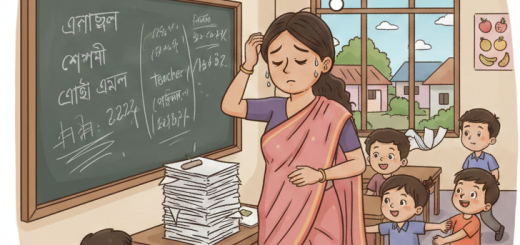
When a child struggles repeatedly with reading, writing, or spelling, many in Bangladesh may assume they are careless, lazy, or uninterested. Teachers may mark them as slow, parents may become frustrated, and classmates may lose patience. Yet in many of these cases, the difficulty may have nothing to do with intelligence or effort. The child may be living with dyslexia, a learning difference that affects how the brain processes language.
What is Dyslexia
Dyslexia is a neurodevelopmental condition. It is not a disease or a mental illness. It describes a difference in how a person’s brain processes language, especially written language. People with dyslexia often find it difficult to decode printed words, spell correctly, or read fluently.
Dyslexia is not a reflection of low intelligence, poor motivation, or lack of effort. Many people with dyslexia are highly creative, intelligent, and capable of great accomplishments once they receive proper support.
Because dyslexia involves underlying differences in language processing, children with dyslexia often struggle even when they receive regular schooling and have access to study materials. Without appropriate support, these difficulties can lead to frustration, low confidence, and even withdrawal from learning.
How Common Is Dyslexia and Why It Matters for Bangladesh
Globally, research estimates that around 5 to 10 percent of the population has dyslexia. Some broader estimates suggest up to 20 percent if one includes people with mild reading difficulties or related challenges.
In Bangladesh, data is limited. One study conducted among primary school students in parts of Dhaka reported a prevalence of 9 percent. This figure indicates that a significant number of students may face challenges related to dyslexia.
Given how common it is, dyslexia should not be seen as rare or special. In Bangladesh, unrecognized dyslexia can hinder a child’s educational journey not because they cannot learn but because classroom practices do not match their learning needs.
Why Dyslexia Happens
Research suggests that dyslexia arises from differences in how the brain processes language. It often involves challenges in phonological awareness, which is the ability to recognize and manipulate the basic sounds of spoken words.
Language has many layers, including sounds, letters, syllables, word meaning, sentence structure, and overall text. A child with dyslexia may struggle at one or multiple levels of processing.
Dyslexia can run in families and may have a genetic component. This means that more than one member of a family may share similar reading and writing difficulties.
Dyslexia does not necessarily go away with age or repeated reading. Without proper instruction, the struggle can persist. With appropriate support, however, children can learn to read, write, and express themselves effectively.
How Dyslexia Presents in Children
Because dyslexia affects language processing, its signs can appear in many ways. Each child is unique, so no single sign guarantees dyslexia. Identifying patterns, especially if difficulties persist despite effort, helps determine who may need support.
Common difficulties in children with dyslexia include:
- Slow or inaccurate reading. They may read very slowly, skip or repeat words, or struggle to sound out unfamiliar words.
- Frequent spelling errors, even with simple and familiar words. They may transpose letters or mix similar-sounding letters.
- Writing may appear disorganized, ideas may be hard to organize, and sentence structure may be weak. Handwriting may be messy or inconsistent.
- Problems with phonological awareness. Children may find it hard to identify or manipulate sounds in spoken words.
- Limited progress despite repeated practice. Even when they try hard, improvement may remain minimal.
- Avoidance and emotional stress. Because reading and writing feel hard, children may avoid tasks or show frustration, which can lower confidence.
- Difficulty following written instructions or copying from the board. Complex instructions or long tasks may be especially hard.
In Bangladesh, these signs are often misunderstood. Teachers may assume carelessness or laziness, while parents may attribute struggles to poor discipline. What is often hidden behind these failures is a treatable learning difference.
Why Dyslexia Often Goes Unseen in Bangladesh
Several factors make dyslexia difficult to identify and support in Bangladesh:
- Low awareness among parents and educators. Many do not understand what dyslexia is and assume children simply need more practice.
- Lack of trained professionals. There are very few special educators or psychologists who can assess and support dyslexic children. Formal diagnosis is rare.
- Inadequate teaching methods. Many schools use traditional methods that assume all children learn the same way. These methods often fail children with dyslexia, who need structured, explicit, multi-sensory instruction.
- Large classes and limited resources. Overcrowded classrooms leave little room for individual attention. Learning aids such as decodable books or phonics materials are uncommon.
- Social stigma and misunderstanding. Reading and writing difficulties are often associated with low intelligence. Children may feel isolated or less capable, affecting self-esteem and willingness to learn.
Because of these factors, many children with dyslexia in Bangladesh struggle silently, unable to learn effectively, losing confidence, and sometimes dropping out.
Evidence-Based Approaches That Work
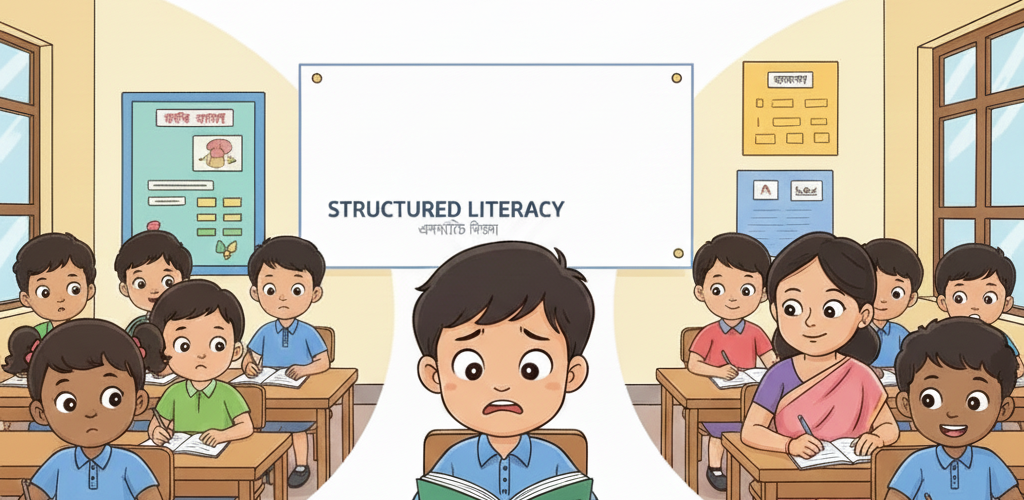
Research shows that traditional “make them read more” approaches rarely help dyslexic learners. Effective methods are explicit, systematic, multi-sensory, and cumulative. This is often called Structured Literacy.
What is Structured Literacy
Structured Literacy teaches both spoken and written language in a highly structured way. It breaks language into components and teaches each explicitly in a planned sequence. Instruction is cumulative, with each new skill building on prior skills.
Key components include:
- Phonology and phonemic awareness: teaching children to hear, identify, and manipulate individual sounds in words.
- Orthography: understanding letter-sound correspondence and spelling patterns to decode and encode words reliably.
- Morphology: understanding roots, prefixes, and suffixes to aid comprehension and spelling.
- Sentence and text structure: learning how sentences and paragraphs are organized to support reading comprehension and writing.
Instruction is multi-sensory. Students see letters, say sounds aloud, trace or write letters, and build words using cards or tiles. Combining visual, auditory, and kinesthetic pathways strengthens memory and neural connections.
Instruction is explicit, systematic, cumulative, and responsive, with ongoing assessment and adjustment. Studies show that Structured Literacy improves reading accuracy, fluency, spelling, and writing skills in children with dyslexia.
Implementing Support in Bangladesh
Raising Awareness
Schools, parent-teacher associations, and civil society organizations should hold workshops and seminars to explain what dyslexia is and is not. Misconceptions that reading difficulty equals low intelligence must be corrected. Media campaigns can also normalize dyslexia and highlight success stories.
Training Teachers
Teachers should receive training in evidence-based literacy methods, including Structured Literacy. Training in identifying learning differences and managing diverse classrooms can make a significant difference. Teacher training institutions should include learning difficulties in their curriculum. Schools should also develop simple screening tools to identify children who may need extra support.
Adapting Classroom Practices
Even without extensive resources, teachers can adopt effective strategies:
- Multi-sensory teaching: combine visual, auditory, and hands-on activities.
- Small steps: introduce new letters or sounds gradually, with review and repetition.
- Decodable reading materials: texts that match phonics patterns taught.
- Extra time: allow additional time for reading and writing tasks.
- Alternative expression: use oral storytelling, drawing, discussion, and group work.
- Scaffolding: peer support, small groups, and volunteer help.
Supporting Parents and Home Learning
Parents play a crucial role. They should provide encouragement, avoid blame, and participate in reading and language activities at home. Celebrating small successes can boost confidence. Consistent home support complements classroom interventions.
Systemic Change
For long-term improvement, structural changes are needed:
- National education policy should include inclusive education and dyslexia awareness.
- Schools should recruit trained special educators and psychologists.
- Resources like decodable books and multi-sensory materials should be developed.
- Research on dyslexia in Bangla-language settings should be encouraged.
Positive Outcomes of Recognition and Support
Children with dyslexia can achieve reading fluency, writing competence, and higher self-esteem with proper support. Inclusive classrooms and understanding peers reduce isolation and improve participation. Many children excel in creativity, problem-solving, and oral expression when their learning differences are acknowledged and supported.
Challenges and Considerations
Dyslexia varies widely between children, requiring flexible teaching methods. Bengali language and script have unique challenges, so methods designed for English need adaptation. Schools face resource limitations and social stigma. Formal diagnosis may not always be available, but early support based on observation can still be effective.
Conclusion
Dyslexia is not a reflection of a child’s intelligence or potential. With empathy, understanding, and proper support, children with dyslexia can learn, thrive, and contribute meaningfully. In Bangladesh, awareness, teacher training, inclusive classrooms, and supportive policies are key to unlocking this potential. Every child deserves the opportunity to succeed.