Digital Divide and the Future of Rural Education in Bangladesh: A Human-Centered Review and Analysis
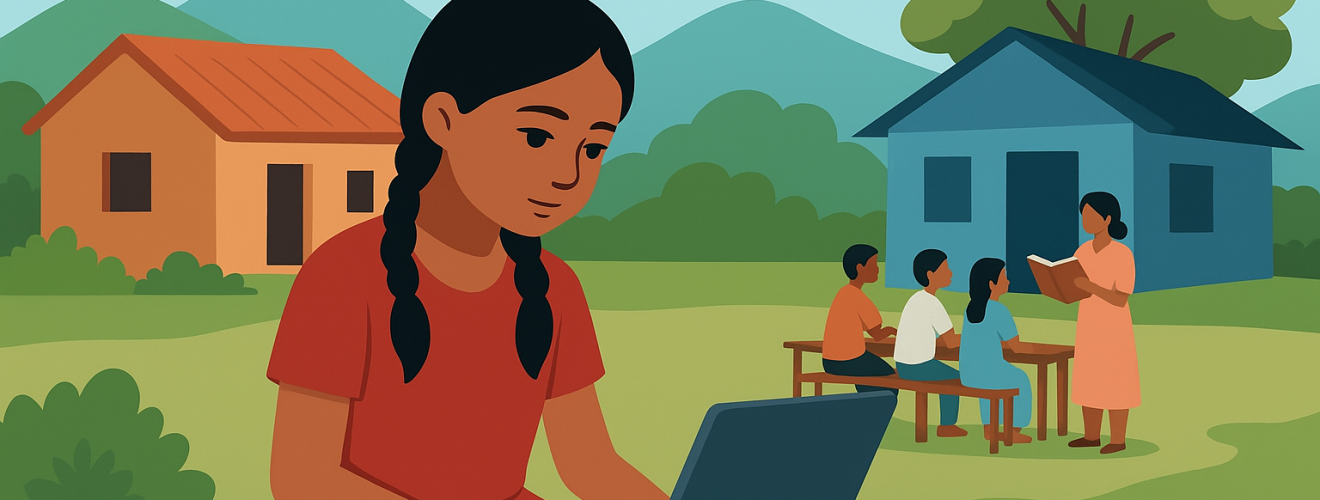
Education is not merely the transmission of knowledge; it is the cornerstone of a child’s holistic development. It shapes cognitive abilities, social skills, ethical understanding, and the capacity to engage with the world critically. In the 21st century, digital learning has become an indispensable tool to broaden access, diversify learning experiences, and cultivate skills necessary for a rapidly changing society. Yet, for rural children in Bangladesh, these opportunities remain unevenly distributed. The digital divide in rural education is not simply a technological issue; it is a social, cultural, and developmental challenge that has long-term implications for equality, opportunity, and human potential.
Contextualizing Rural Education in Bangladesh
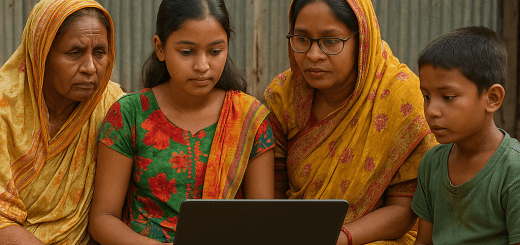
Rural schools in Bangladesh face persistent challenges in infrastructure, teacher availability, and educational resources. UNESCO’s 2021 report indicates that nearly 45 percent of rural primary and secondary school students are excluded from modern learning opportunities. Data from BANBEIS (2023) further shows that almost 70 percent of rural students lack access to any form of electronic devices or digital learning tools at home.
The COVID-19 pandemic amplified these inequalities. Urban students could continue their studies through online classes and video lessons, whereas rural children largely remained excluded. This exclusion created substantial learning gaps, threatening to widen long-standing educational inequalities. Beyond academic performance, the lack of access undermines children’s confidence, motivation, and engagement with learning, creating challenges that persist over time.
Theoretical Perspective
From a socio-ecological perspective, Bronfenbrenner’s framework helps us understand the multiple layers influencing a child’s learning. Individual access to technology is mediated by family resources, community infrastructure, school support, and national educational policies. Piaget’s cognitive development theory also suggests that active engagement with diverse learning materials including digital resources enhances cognitive growth, critical thinking, and problem-solving abilities. Without access, rural children are denied environments conducive to these developmental processes.
Impacts of the Digital Divide
The digital divide affects rural children across cognitive, social, and ethical dimensions:
- Cognitive and educational impact: Digital learning facilitates self-directed study, exposure to interactive content, and continuous skill development. Children without access are disadvantaged, falling behind peers with digital exposure.
- Psycho-social effects: Lack of access can diminish self-esteem and the sense of agency. Rural students may feel excluded from broader knowledge networks, which can erode motivation.
- Gendered disparities: Girls often face compounded barriers due to household economic constraints and cultural norms that limit their use of technology.
CAMPE’s 2022 report highlights that rural schools implementing digital learning initiatives such as computer labs, tablets, or mobile-based lessons, observed measurable improvements in attendance, engagement, and learning outcomes. This evidence underscores the potential of digital education to enhance both academic performance and psycho-social development.
Root Causes
Several interrelated factors contribute to the persistence of the digital divide in rural Bangladesh:
- Economic constraints: Many families cannot afford digital devices, nor can they bear ongoing costs of internet connectivity.
- Infrastructure limitations: Unreliable electricity, limited internet coverage, and poorly equipped schools restrict the effective use of digital learning.
- Teacher preparedness: Educators frequently lack training to integrate digital tools meaningfully into their teaching.
- Socio-cultural barriers: Social norms, particularly concerning girls’ access to technology, further restrict participation in digital learning.
Global and Local Strategies to Address the Divide
International experiences provide insights into effective strategies. In countries like India, Kenya, and Nepal, mobile-based learning platforms, community computer hubs, and blended learning programs have successfully mitigated rural digital exclusion. UNICEF and local NGOs in Bangladesh have introduced mobile-based audio-visual lessons, small digital labs, and community learning centers, which have shown positive impacts on engagement and learning outcomes.
Teacher capacity building is critical. Training educators in digital pedagogy ensures that technology is not simply available, but actively enhances learning. Community involvement, where parents and local leaders create supportive learning environments, also strengthens participation and retention.
Critical Analysis: Beyond Access
Access alone is insufficient. Digital inclusion must be coupled with pedagogical strategies that foster critical thinking, creativity, and ethical reflection. Without this, technology risks reinforcing existing inequalities rather than mitigating them. Schools and communities must also address cultural perceptions, gender inequities, and parental engagement to ensure equitable participation.
From a policy perspective, a multi-layered approach is essential:
- Infrastructure investment: Internet connectivity, reliable electricity, and school-based digital tools are foundational.
- Resource accessibility: Affordable internet and educational software facilitate sustained engagement.
- Teacher professional development: Continuous training enables effective integration of digital tools into curriculum and pedagogy.
- Equity-focused interventions: Targeted programs for girls and marginalized children ensure that social and cultural barriers do not hinder access.
Prospects and Human-Centered Vision
Digital education offers more than technological innovation; it embodies a commitment to inclusive, equitable, and human-centered learning. For rural children, it promises cognitive, social, and ethical growth. When effectively implemented, digital education can transform rural education into a resilient system where children are empowered to compete, innovate, and contribute meaningfully to society.
Ensuring access is not merely a policy or technical challenge; it is a moral and social responsibility. Every child has the right to education that prepares them for the complexities of the contemporary world. Digital inclusion must be guided by principles of equity, participation, and social justice to realize the full potential of rural education in Bangladesh.
Conclusion
The digital divide remains one of the most significant barriers to equitable education in rural Bangladesh. While infrastructure gaps, economic limitations, and socio-cultural factors present challenges, evidence from local and international interventions demonstrates that strategic investment, community engagement, and teacher empowerment can transform these barriers into opportunities.
Ultimately, digital education is a tool to realize the broader vision of inclusive, human-centered learning. Rural children in Bangladesh deserve not only access to technology but also the pedagogical and social support that allows them to thrive. Closing the digital gap is not only a matter of policy; it is an ethical imperative that shapes the future of the nation.
References
- BANBEIS, Annual Education Report, 2023
- CAMPE, Education Watch Report, 2022
- UNICEF Bangladesh, Situation Analysis of Children, 2022
- UNESCO, Global Education Monitoring Report, 2021