A Silent Crisis Behind Quality Primary Education: Teacher Stress and the Path to Solutions in Bangladesh
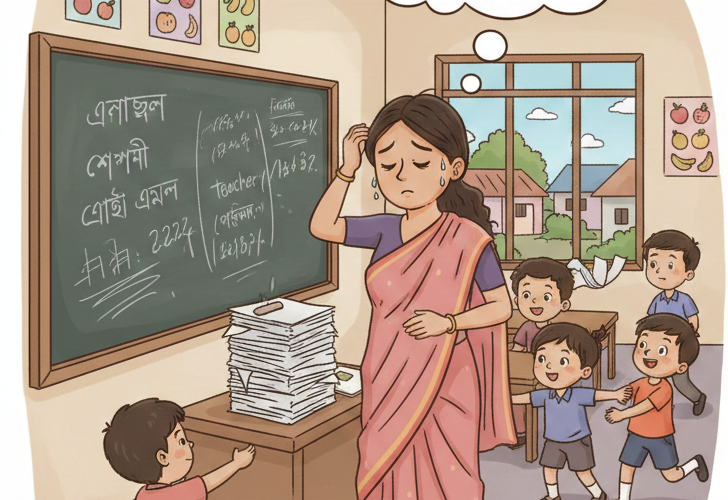
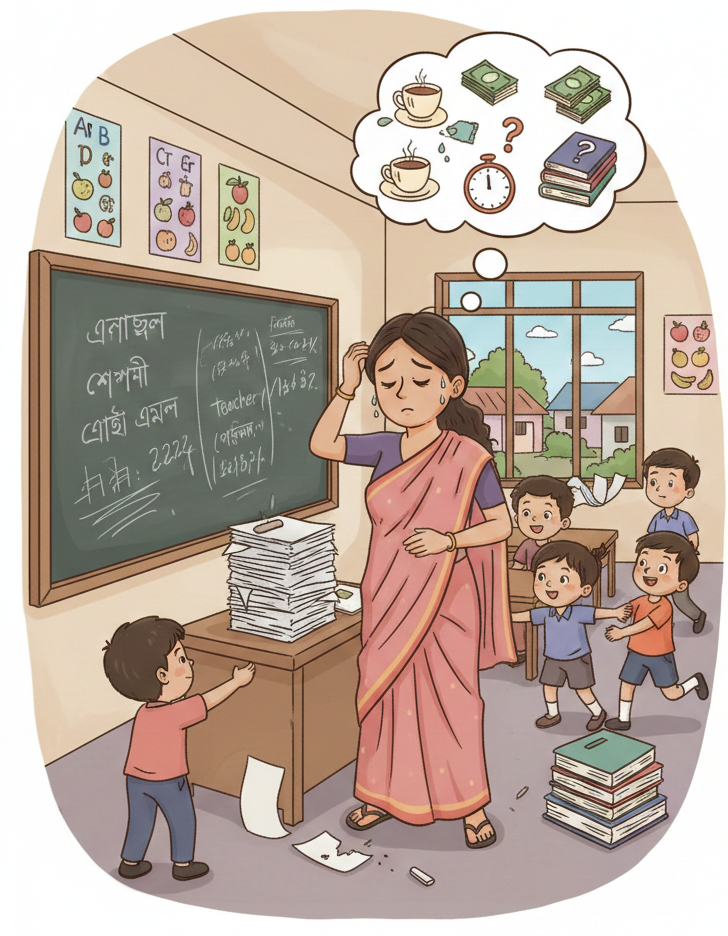
The discussion around improving the quality of primary education in Bangladesh has become central to nearly every education debate. New curricula, competency-based learning, and school-level initiatives all form essential steps toward better education. Yet one critical question often remains overlooked: how are the teachers themselves doing? Are they mentally prepared to stand in front of a classroom each day, or are they drowning under a multitude of responsibilities, losing sight of their own well-being?
Teachers are the foundation of education, and the future of primary education depends directly on their mental health. This silent crisis is not merely a personal issue; it is an institutional problem. The responsibilities teachers carry every day shape the future of children, yet the pressures of their profession often go unnoticed. Gradually, this stress erodes their focus, confidence, and creativity, weakening the learning environment in the classroom. Despite the clear link between quality education and teacher well-being, this reality has not yet become central to policy discussions.
Why teachers face mental stress
The first cause is excessive workload. Teachers do more than just teach. They must upload data, record attendance, document activities, track student progress, and submit administrative reports. In many schools, weak internet connections make these tasks even more time-consuming, forcing teachers to work late into the evening. This reduces their rest and personal time.
The second cause is inadequate staffing. When schools have fewer teachers than required, the burden falls heavily on a few. One teacher may have to handle multiple classes and subjects, leaving little time for lesson planning or individual student attention.
The third cause is evaluation pressure. Teacher assessments often focus on paperwork and documentation rather than actual teaching. This creates a sense that they are spending more time proving their work on paper than teaching students effectively.
The fourth cause is the school environment. Many schools lack staff rooms, adequate teaching materials, or timely administrative support. Without a supportive environment, the daily workload becomes mentally exhausting.
How this stress affects education
First, the classroom environment suffers. Teachers under stress struggle to be patient, which slows the learning pace of students.
Second, teacher-student relationships weaken. Children quickly sense a distracted teacher, which can discourage questions and reduce engagement.
Third, the overall school atmosphere is affected. Stress in one teacher can influence colleagues, creating misunderstandings, poor communication, and reduced motivation.
Fourth, in the long term, the teaching profession loses its appeal. Younger generations see teaching as a stressful career, which discourages new talent from joining the profession.
Paths to solutions
Addressing this crisis requires practical and institutional action.
First, administrative tasks should be reduced. A single platform for data collection and reporting can prevent teachers from submitting the same information multiple times. Employing support staff for administrative work allows teachers to focus more on teaching.
Second, teacher recruitment must increase. Without sufficient staff in every school, mental stress cannot decrease. Strategic hiring and alternative teacher arrangements can significantly reduce workload pressures.
Third, training programs must be relevant and practical. Many teachers feel that training adds extra pressure. Training should instead enhance skills and provide real support.
Fourth, the school environment must improve. Teachers need spaces to rest and sufficient teaching materials to ease their work.
Fifth, mental health and self-motivation should be prioritized. Regular meetings, peer support groups, counseling, and stress management techniques can strengthen teachers mentally. Schools could dedicate one day each month solely to teacher well-being activities.
Why supporting teachers matters
A mentally healthy teacher directly impacts student learning. Children become more engaged, curious, and motivated. Teachers feel comfortable and confident standing in the classroom every day. School improvement begins with the teacher. When they receive understanding and support, they can give their best.
Many plans are underway to improve primary education in Bangladesh. But if teachers remain stressed, these initiatives will not succeed. Protecting teacher well-being is the most vital investment in the education system. Teachers deserve respect, support, and not just responsibility.
We often talk about students, textbooks, and exams when shaping education policy, but we rarely speak about the people who stand in classrooms every day and teach. True progress in education happens only when teachers are well-supported. To ensure a brighter future for primary education, we must first understand our teachers, reduce their stress, and create a humane working environment. Only then will learning be joyful, and children will receive the quality education they deserve.