Reading Habits and Life Skills: How Books Shape Children’s Morality, Social Values, and Life Competence
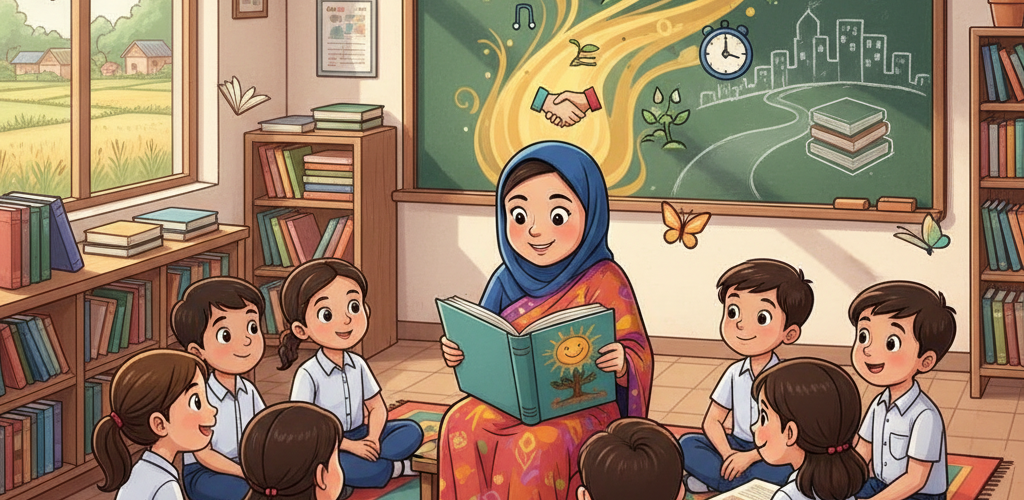
Books are more than just a source of knowledge for children; they are powerful tools for building character, morality, social values, and life skills. In today’s world, children are increasingly drawn to technology. They spend more time on mobile phones, tablets, or televisions, while interaction with books is declining. This not only affects their academic performance but also impacts their mental and social development. Therefore, cultivating a reading habit from an early age and linking it to life skills is essential.
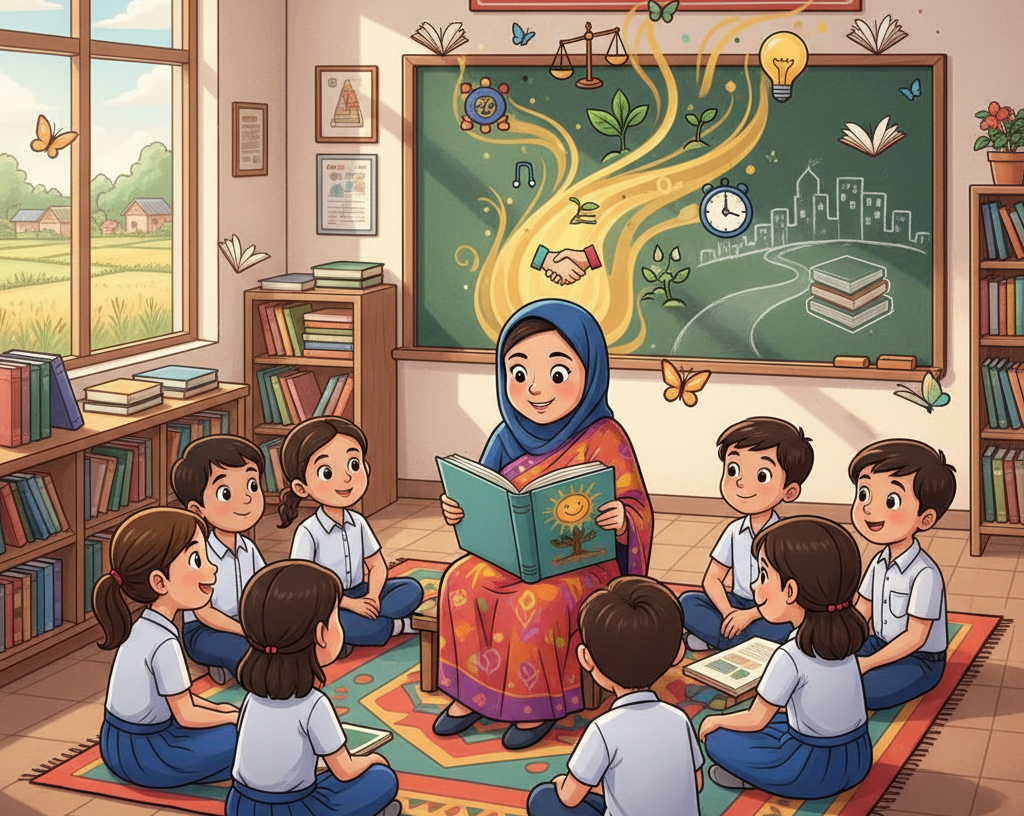
Exposure to books connects children to new worlds. Each story, character, and sequence of events teaches moral lessons. When children observe honesty, empathy, responsibility, and courage in characters, these values leave a lasting impression. They learn to be compassionate, distinguish right from wrong, and take responsibility for their own actions.
Books also develop children’s social skills. Stories, novels, and historical accounts show that everyone in society has responsibilities, respect must be given to others, and cooperation is valuable. The interactions, friendships, and problem-solving approaches of story characters help children build real-life relationships. As a result, children not only focus on their personal growth but also understand the collective welfare of society.
Reading strengthens children’s thinking and problem-solving abilities. By observing characters and situations, children learn reasoning, quick decision-making, and practical solutions. These skills are not only useful for school exams but also help children face everyday challenges with confidence and competence.
Books play a vital role in building self-confidence. Regular reading encourages children to embrace new ideas. They test what they read, recognize their abilities, and develop the power to express themselves. This fosters independent thinking, prepares them to acquire new knowledge in different areas of life, and even stimulates creative thinking.
Creating a reading-friendly environment at home and school is crucial. Classroom reading activities, story discussions, and experience-based conversations make learning dynamic. At home, when parents discuss books with children, their interest grows further. As reading habits form, children’s morality, social values, and life skills develop rapidly.
Reading contributes to multiple aspects of life skills. It does not just increase knowledge but teaches time management, goal-setting, responsibility, teamwork, critical thinking, and self-reflection. Through stories and short tales, children train their minds, strengthen their thinking, and mature in moral and social standards. French philosopher René Descartes once said that,
“Reading good books is like conversing with the great minds of the past century”.
In Bangla literature, Pramatha Chaudhuri’s essay “Boi Pora (Reading Books)” emphasizes personal growth and intellectual development through literature. He highlighted that,
“Knowledge gained from reading is not only practical but also essential for mental development.”
He believed that,
“Reading expands the mind and understanding, making individuals self-educated and capable of keeping pace with a progressive world.”
Today, reading is more important than ever. Technology may distract children, but if parents and teachers present reading as enjoyable and integrate it into daily routines, children naturally develop an interest in books. Making reading enjoyable, teaching through stories, and providing opportunities for discussion effectively enhances children’s moral and social skills.
In conclusion, reading is a powerful teacher in a child’s life. It enriches their education, shapes character, builds morality and social values, and equips them with life skills. Introducing children to books from an early age and fostering reading habits through family and school collaboration ensures that they gain knowledge and become capable of making responsible and informed decisions. Reading guides children not only in education but also on the right path in life.