Engaging Youths in Civic Engagement: A Pathway to Empowerment in Bangladesh
Introduction With nearly half of its population under the age of 30, Bangladesh boasts a vibrant and dynamic youth demographic. Effectively engaging this group in civic activities is vital for promoting democratic governance, safeguarding human rights, and driving social change. This article delves into strategies for fostering youth involvement in participatory governance and civic responsibilities.
Understanding Youth Perspectives and Aspirations To successfully engage young people, it is essential to align efforts with their perspectives and aspirations. Platforms that address their interests such as interactive workshops, open discussions, and campaigns on topics like education, employment, and climate change can serve as effective starting points. An environment that encourages open dialogue and collaboration can gradually cultivate a sense of civic responsibility among the youth.
Climate, equality, justice our fight, our future.
Integrating Social Awareness into Civic Education Incorporating social awareness into civic education programs is a cornerstone of youth engagement. Such initiatives build an understanding of governance, democratic principles, and rights, equipping young individuals to make informed decisions. Partnerships between NGOs, educational institutions, and civic organizations can help develop curricula that emphasize human rights and active citizenship. These efforts might include expert-led seminars, simulation exercises, and online platforms for knowledge exchange.
Civic duty isn’t a choice, it’s a legacy. Let’s build a better Bangladesh.
Utilizing Technology and Collaborative Partnerships Technology, particularly social media, serves as a powerful tool for reaching and mobilizing the youth. Creative campaigns featuring relatable content, inspiring narratives, and engaging visuals can ignite interest and prompt action. Collaborations with local organizations, universities, and international agencies can further strengthen these efforts, providing the resources and networks needed for impactful youth engagement.
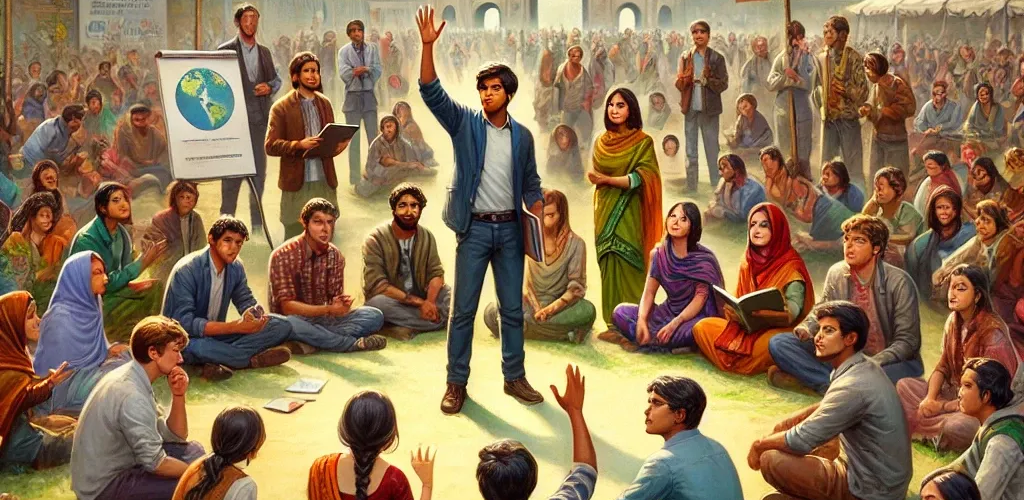
Amplifying Youth Voices Providing young people with platforms for meaningful representation such as youth councils and local forums is crucial for amplifying their voices. These platforms empower youth to express their views, participate in decision-making, and influence governance processes. By creating opportunities for direct involvement, we foster a sense of inclusion and ensure policies reflect the aspirations of younger generations.
In every voice lies the power to uplift a nation. Speak up, stand out.
Creating Supportive Policies and Enabling Environments Establishing policies that encourage youth participation in governance is a critical step. Addressing barriers like economic instability, resource limitations, and lack of access to opportunities is essential for enabling active involvement. Investment in youth-friendly spaces and programs can further ensure their sustained engagement.
Invest in youth-friendly spaces, reap a resilient society.
Conclusion Engaging Bangladesh’s youth in civic participation demands a holistic approach that integrates education, empowerment, technology, and inclusivity. By fostering a culture of engagement and recognizing the transformative potential of young people, we can lay the foundation for a more equitable and progressive society. NGOs, educators, and civic leaders must prioritize youth participation not as an option but as a necessity for achieving sustainable development and justice in Bangladesh.