Child-Centered Primary Education: The Key to Quality Lies in Teacher-Student Connection
The journey of primary education in Bangladesh began with the aim of promoting mass literacy and expanding basic education. Over the past few decades, significant progress has been made. Today, enrollment in primary education is nearly universal, gender parity has been largely achieved, and infrastructural improvements are visible. Yet, a crucial question remains: Are our children truly learning? Does primary education genuinely lay the foundation for their knowledge, reasoning, and social skills?
Analyses from international research, national assessments, and even government reports indicate that learning outcomes have not yet reached the expected standard. A substantial proportion of students fail to acquire basic literacy and numeracy skills by the end of Grade Five. Examining the root causes, one consistently finds a critical factor: the lack of meaningful teacher-student connection.
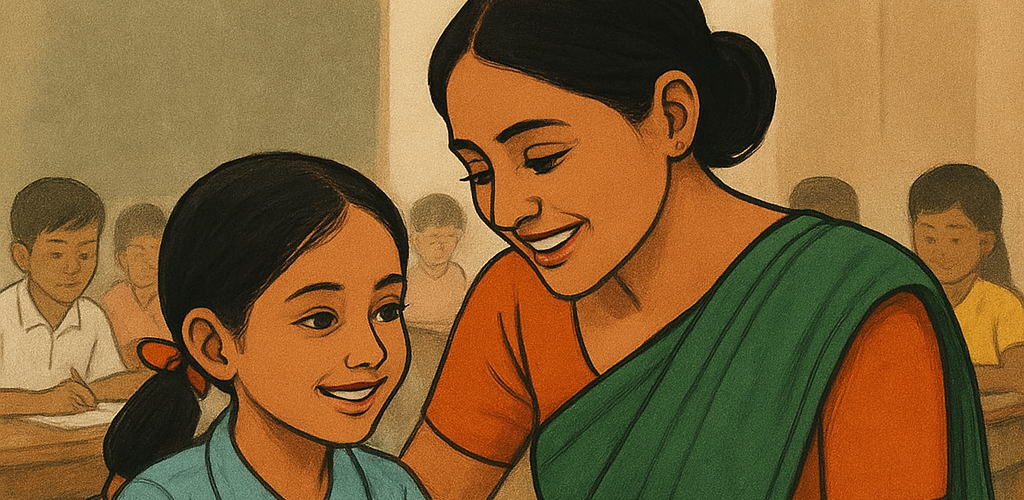
Research shows that the warmer, more sincere, and trust-based the relationship between a teacher and a child, the greater the child’s motivation, self-confidence, and cognitive development. The core of quality education lies in this teacher-student connection. International educational theories support this truth. Vygotsky’s concept of the Zone of Proximal Development (ZPD) emphasizes that a child’s learning potential reaches its peak when a teacher patiently guides them to the next stage. Similarly, Bronfenbrenner’s ecological theory reminds us that the relationship between family and school plays a determining role in a child’s development.
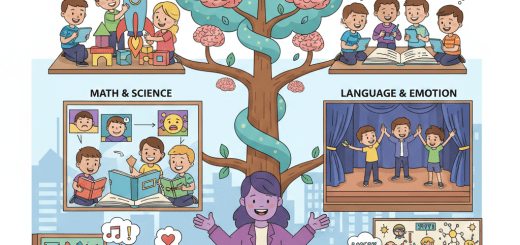
Child-centered education views the student as the focal point of the learning process. Each child is unique, with distinct learning styles, interests, and paces. True education is not merely the transmission of information but teaching that nurtures attitudes, curiosity, creativity, and self-confidence. The reality, however, is different. Among primary teachers in Bangladesh, many lack sufficient knowledge about various learning disorders affecting children.
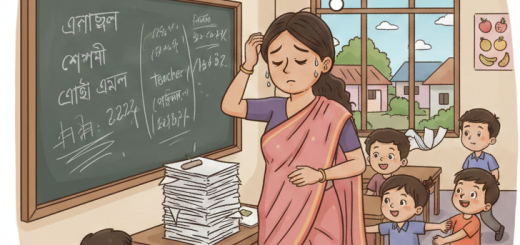
Several critical learning disorders impact children’s education. Dyslexia affects reading and language skills, often posing challenges in the primary education context. Dysgraphia causes difficulties in sentence formation and requires extra time for writing. Dyscalculia makes understanding numbers, arithmetic operations, and other mathematical concepts difficult. Children with Attention Deficit Hyperactivity Disorder (ADHD) struggle to sustain attention and remain focused on tasks. Many teachers cannot understand why some children move around in class or lose focus. Beyond these, other learning disorders exist that require strong teacher-student connections for identification and support. Training teachers in these areas is essential to improving the quality of education. Without a genuine teacher-student connection, achieving noticeable improvement in learning is nearly impossible.
The disparity between urban and rural primary education is striking. Urban schools generally have better-qualified teachers, more instructional materials, and more effective classroom management. Children often receive personal attention and opportunities to learn in small groups. In contrast, rural, remote, and hard-to-reach areas face excessive student-teacher ratios, limited infrastructure, and insufficient teacher training. Schools in hilly regions, riverine islands, and among small ethnic communities face compounded challenges. Children’s mother tongues and cultural backgrounds often do not align with the curriculum. Without sincere teacher-student engagement, improving education quality is extremely difficult. Often, children from minority communities sit separately or at a distance from others, and even teachers may not engage meaningfully with them, conflicting with the principles of inclusive and universal primary education.
Teacher-student connection extends beyond curriculum delivery; it influences children’s emotional, social, and psychological development. When teachers listen to children, respond to their questions, and encourage creativity and critical thinking, children become more motivated to learn. This connection is especially critical for children with learning disorders. When a child feels that a teacher values them, pays attention, and listens, they naturally engage and focus in class.
Teachers are not merely instructors; they are guides who build children’s confidence, support problem-solving, and foster the joy of learning. Therefore, teacher training must go beyond subject mastery to include child-centered attitudes, recognition of learning disorders, and strategies for support. A collaborative effort by the government, teacher training institutions, NGOs, and local communities can ensure that children receive authentic, meaningful education.
Comparative analysis of urban, rural, and remote regions shows that where teacher-student connection is strong and teachers are aware of learning disorders, students’ learning outcomes are significantly better. Urban schools, with attentive teachers, allow children to express creativity, develop problem-solving skills, and gain confidence. In rural and remote areas, the lack of teacher connection and inclusive attitudes reduces educational quality.
The role of families and communities in implementing child-centered primary education is undeniable. When children receive support both at school and at home, their learning outcomes improve. This is particularly crucial for children from impoverished and marginalized families. When schools and families jointly ensure child-centered education, meaningful improvements in learning can be achieved.
Child-centered primary education represents the future of education in Bangladesh. If teachers are attentive, connected, and supportive, especially toward children with learning disorders, marginalized groups, and minority communities, quality education can be realized. Small actions such as valuing a child’s question in class, encouraging creativity, and showing empathy toward learning challenges can have a profound long-term impact.
While Bangladesh’s achievements in primary enrollment are commendable, ensuring genuine learning quality requires making teacher-student relationships more human, inclusive, and empathetic. A child-centered approach, which places sincere teacher-student connection at the heart of education, can accelerate qualitative transformation in Bangladesh’s primary education system and enhance learning outcomes.