The Impact of Limited Physical Education and Sports on Children’s Growth in Bangladesh’s Primary Schools
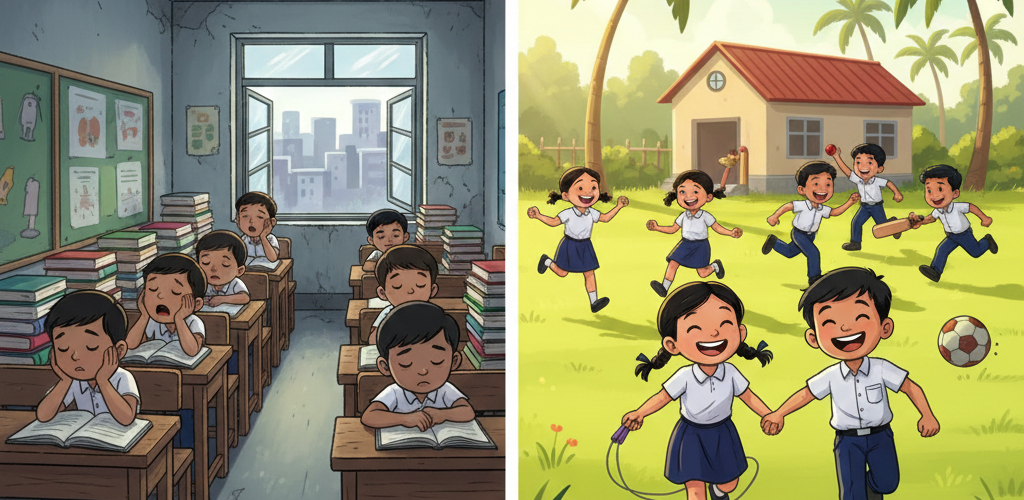
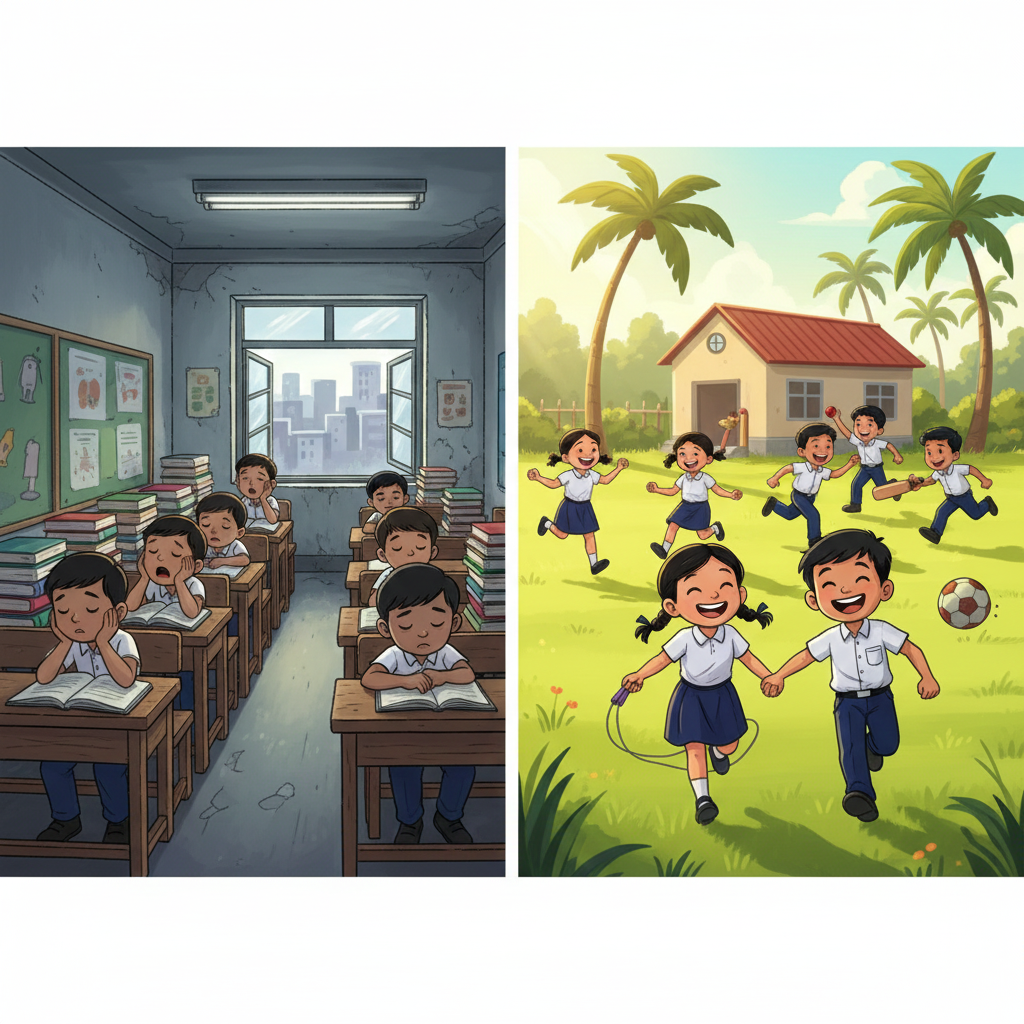
Primary education shapes the first stage of a child’s learning journey. This stage cannot rely on textbooks alone. Children need equal support for their physical and mental growth. For this reason physical education and sports are essential parts of early schooling. Yet in many schools across Bangladesh this area receives the least attention. Many schools do not have a playground, trained teachers or enough time allocated for exercise. Children are being deprived of regular movement and active play. This affects their physical health as well as their emotional, social and academic development.
If you visit an ordinary primary school you will see children sitting in one place for hours. Except for a short break they have no chance to take part in organised games. This reduces their natural energy and weakens their mental freshness. Learning becomes tiring and their concentration falls quickly.
Research confirms that regular movement supports brain development. Studies found that children who take part in at least thirty minutes of active play every day show better memory, stronger problem solving skills and improved focus. In Bangladesh many primary students struggle with basic skills. Lack of physical education may be one of the reasons because children learn better when their body and mind feel active.
Physical exercise also teaches discipline. When children follow game rules, work in teams and accept both winning and losing, they learn how to manage real life challenges. Children who play regularly develop higher confidence and make friends with ease. When play opportunities decrease, some children become isolated while others become overly restless or very quiet. Regular physical activity helps prevent these behaviour issues.
Health studies in Bangladesh show rising concerns. More children are gaining weight, facing weak muscles, low stamina and eye strain. Long screen time and limited physical movement are key causes. When schools reduce time for sports this problem becomes worse. As a country we want a healthy generation yet many children are missing the basic right to exercise.
Although the national curriculum recognises physical education it has not been fully implemented. Many schools do not have trained physical education teachers. Even when teachers are available they often lack proper training and equipment. Urban schools suffer from lack of space and rural schools often have unused or poorly maintained fields.
Schools, communities and local authorities need to work together. Even in small spaces schools can arrange simple games, exercise sessions and group activities. Children need opportunities to run, jump, stretch and play based on their age. What matters most is consistency.
Schools should include at least two or three physical education classes each week. If trained teachers are not available regular teachers can receive short training to guide basic exercise. Many countries follow this approach until specialist teachers are appointed.
Parents also influence this change. If parents encourage active play children become more interested in joining. Many parents still focus only on exam marks which pushes children toward memorising lessons. Without good health their learning cannot grow. Parents need to understand that a healthy body strengthens the mind.
Regular physical activity improves attendance as well. Research shows that children who play actively enjoy school more and feel less stress. Teachers note that active children participate more in class and remain attentive for longer periods.
To strengthen primary education in Bangladesh this gap must be addressed without delay. Books alone cannot create quality learning. A healthy child is the foundation of quality education. Schools should ensure time for play, appoint trained teachers, maintain playgrounds and encourage daily physical activity.
The environment where children grow today will shape the future of Bangladesh. If we want a generation that is strong, healthy, focused and socially confident physical education and sports cannot remain neglected. It is time to recognise that active learning and physical growth are equally important. Acting now will help build a healthier and more capable generation for the country.