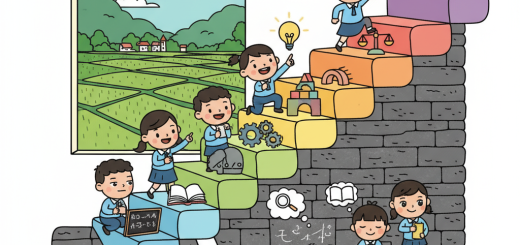
Social-Emotional Learning in Primary Education: The Missing Lesson in Quality Education
When discussing primary education in Bangladesh, we often focus on enrollment rates, examination results, or infrastructure development. Yet one critical question often goes unasked: Are our children truly enjoying the process of learning? Are they learning to recognize and manage their emotions, collaborate with peers, or are they merely memorizing textbooks? Around the world, educators are increasingly emphasizing Social-Emotional Learning (SEL) to address this very question.
Why Social-Emotional Learning Matters
Social-Emotional Learning equips children with skills in self-awareness, self-regulation, empathy, teamwork, and building positive relationships. Academic knowledge alone cannot ensure holistic development. The ability to stay attentive in class, collaborate effectively with peers, resolve conflicts, and confidently express oneself is equally vital for a child’s overall growth.
International research shows that integrating SEL programs at the primary level increases students’ engagement, reduces behavioral problems, and even improves mental health outcomes.
Bangladesh’s Experience
BRAC Pilot Initiative Research conducted by BRAC and BIGD revealed that children in pilot schools improved in emotional expression and peer collaboration after SEL programs were implemented. However, due to limited coverage, lack of long-term follow-up, and insufficient teacher training, the full potential of these programs could not be realized.
UNICEF’s Efforts Post-COVID-19, UNICEF has emphasized school-based Mental Health and Psychosocial Support (MHPSS). As part of national curriculum reform, steps have been taken to integrate SEL. Simplified modules and teacher-assisted activities are helping promote students’ mental well-being.
The Role of Teachers Several studies in Bangladesh indicate that when teachers themselves are emotionally competent and able to manage their feelings, it directly reflects in their students’ learning. In other words, a teacher’s emotional intelligence is as important as teaching skills in enhancing students’ attention, confidence, and learning outcomes.
Lessons from International Research
Studies from various countries confirm that SEL effectively reduces anxiety and depression among children. Yet, such initiatives succeed only when training is long-term, monitoring is continuous, and content is culturally relevant and age-appropriate.
Our Challenges
- Lack of Adequate Training: Most teacher training is limited to one-off workshops without long-term coaching.
- Weak Monitoring: There is no reliable system to evaluate the effectiveness of SEL programs.
- Limited Local Relevance: Direct adoption of foreign models often fails to align with the cultural context of Bangladeshi children.
Recommended Actions
- Long-Term Teacher Training – Beyond one-off workshops, regular coaching, classroom observation, and reflective practices must be institutionalized.
- Integration into National Curriculum – SEL and mental health programs should become a core, mandatory part of educational policy.
- Monitoring and Parental Involvement – Program success must be evaluated through classroom observation, student feedback, and parental input.
- Use of Local Content – Stories, drama, songs, and games reflecting local culture enhance program effectiveness.
- Sustained Research – Collaboration between government and NGOs and consistent data-sharing are necessary to identify effective models.
Conclusion
Social-Emotional Learning in primary education is not a luxury; it is an urgent necessity. Pilot initiatives have already demonstrated positive outcomes on a small scale, and the time has come to expand them nationwide.
With proper training, cultural relevance, parental involvement, and regular evaluation, SEL can make children’s educational experiences more meaningful. Coordinated efforts by policymakers, NGOs, donor agencies, and school administrators will not only enhance educational quality but also nurture a healthy, empathetic, and confident generation.
References
- BRAC-BIGD, Promoting Social and Emotional Learning in BRAC Primary Schools (2012)
- UNICEF Bangladesh, Improving Students’ Mental Health in Bangladesh
- International SEL Research & Meta-Analyses (PMC)
- Bangladeshi Research: Teacher Emotional Intelligence & Student Outcomes (bauet.ac.bd)