Digital Literacy for All: Reaching Bangladesh’s Underprivileged and Marginalized Communities
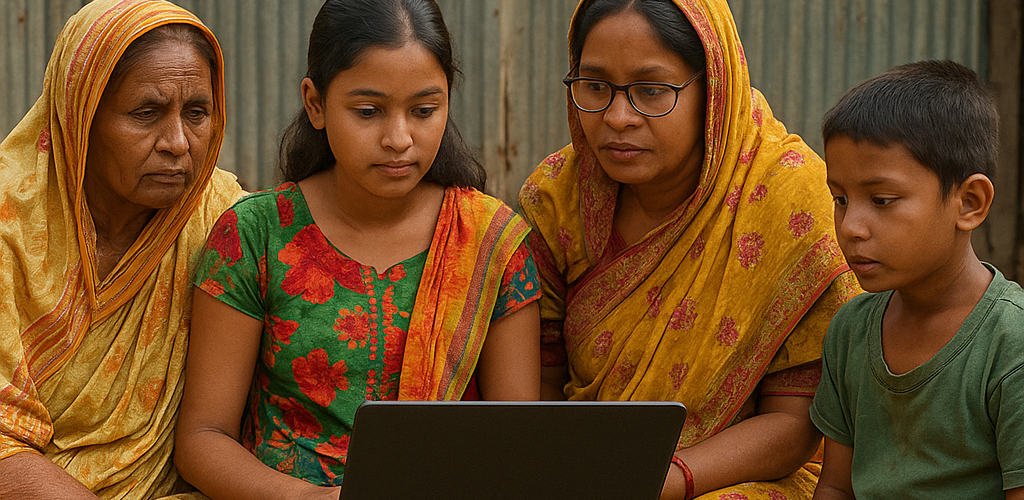
In today’s world, being digitally literate isn’t a luxury it’s a necessity. From accessing information and education to finding jobs and staying connected, digital tools have become part of everyday life. But while many in Bangladesh are moving ahead in this digital age, large sections of our population especially underprivileged and marginalized communities are being left behind. If we want to build an inclusive and empowered Bangladesh, we must urgently address this growing digital divide.
What Does “Digital Literacy” Really Mean?
Digital literacy isn’t just knowing how to turn on a computer or use a smartphone. It means being able to confidently navigate the internet, use digital platforms for learning or business, understand online safety, and engage in meaningful communication through digital tools. In short, it’s the ability to use technology in a way that improves everyday life.
Who Are Being Left Behind?
In Bangladesh, when we talk about marginalized communities, we’re referring to groups like rural poor families, indigenous populations, persons with disabilities, transgender individuals, and people living in remote areas like chars and haors. Many of these groups already face barriers in education, healthcare, and employment and now, they’re also at risk of being digitally excluded.
Even though Bangladesh has made impressive strides in expanding mobile and internet access with over 130 million mobile subscribers and 110 million internet users access is still not equal. For example, urban youth might learn coding or digital marketing, while a teenage girl in a remote village may have never even touched a computer.
Why Is Digital Literacy So Hard to Reach for These Communities?
There are a few key reasons:
- Lack of Infrastructure: Many remote areas still suffer from weak internet signals, unreliable electricity, and a lack of digital devices.
- Poverty and Cost Barriers: When a family struggles to afford three meals a day, buying a smartphone or paying for internet is often out of the question.
- Language and Literacy Issues: A lot of digital content is in English or formal Bangla, which is hard to understand for people with low literacy levels or who speak indigenous languages.
- Social Norms and Discrimination: Girls, persons with disabilities, and members of the transgender community often face extra challenges both socially and within their own families—that prevent them from accessing digital tools.
- Lack of Awareness and Skills: Even where devices and internet exist, many people simply don’t know how to use them effectively, or they fear doing something wrong.
What’s Being Done and What More Can Be Done?
To be fair, some efforts have been made. The government’s a2i (Access to Information) program has set up Union Digital Centers (UDCs) across the country to provide basic digital services in rural areas. NGOs like BRAC have also stepped in with mobile training vans, digital schools, and programs specifically targeting women and marginalized youth.
But more is needed and it has to be more focused and better tailored.
Here are a few ideas that could help bring meaningful change:
- Teach in Local Languages and Contexts: Digital literacy programs should be designed in simple Bangla or in indigenous languages, using examples from real life so learners can relate and apply them.
- Create Safe and Accessible Learning Spaces: Whether it’s a community center or a mobile digital classroom, these spaces should be inclusive and welcoming especially for girls, persons with disabilities, and other vulnerable groups.
- Subsidize Devices and Data: Public-private partnerships can help provide affordable devices and internet packages for low-income families.
- Build Skills for Real Opportunities: Training should include practical digital skills like online freelancing, e-commerce, basic coding, or mobile banking things people can actually use to earn or improve their lives.
- Engage Community Leaders: Local imams, teachers, and elected representatives can help change mindsets and encourage families to support digital learning especially for girls and young women.
A Special Role for TVET
Technical and Vocational Education and Training (TVET) programs hold great potential in this area. By integrating digital literacy into vocational training tailored for people from low-income or marginalized backgrounds—we can prepare them not only for jobs, but for full participation in the digital society.
The Bottom Line
Digital literacy is not just about technology it’s about empowerment, inclusion, and dignity. If we fail to bring marginalized communities into the digital fold, we risk deepening existing inequalities. But if we act wisely and inclusively, we can unlock the talents, dreams, and contributions of millions who are still waiting to be part of our digital future.
References (for further reading and credibility):
- Bangladesh Telecommunication Regulatory Commission (BTRC), 2023
- UNESCO, Global Framework on Digital Literacy Skills
- Bangladesh Bureau of Statistics (BBS), 2022 ICT Use Report
- BRAC Annual Report, 2022
- a2i Program under the Prime Minister’s Office


