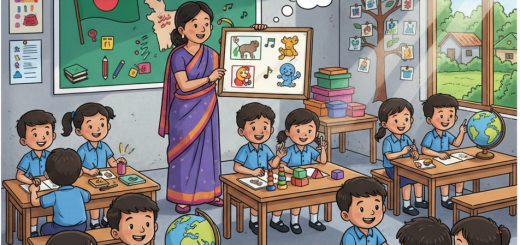
Practical Classroom Strategies for Dyslexic Students in Bangladesh
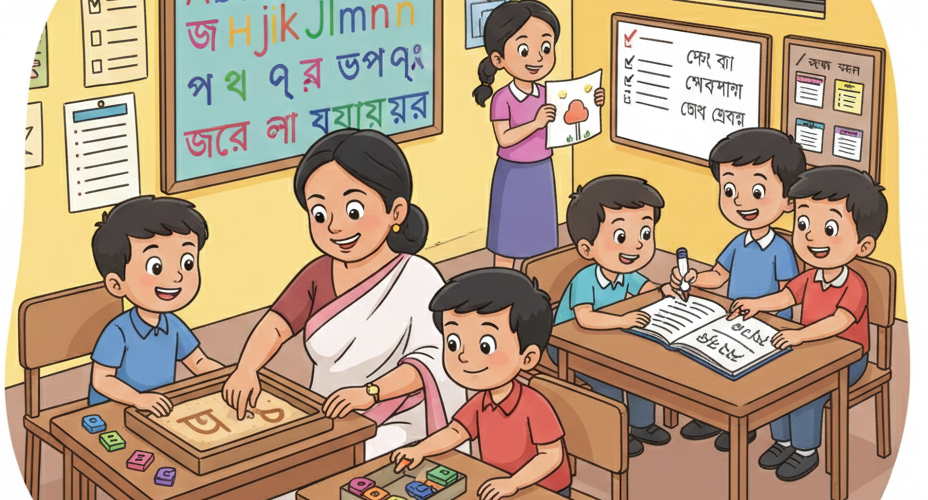
Supporting children with dyslexia does not require expensive resources or specialized infrastructure. Many effective methods can be implemented in regular classrooms with creativity, planning, and patience. The strategies below are designed to be realistic and actionable for Bangladeshi teachers working in both urban and rural schools.
1. Multi-Sensory Learning Activities
Children with dyslexia learn best when multiple senses are engaged simultaneously. Combining visual, auditory, and tactile approaches strengthens memory and understanding.
Letter and Sound Tracing: Students can trace letters on sand trays, rice trays, chalkboards, or cardboard while saying the sound aloud. Repeating this activity daily helps reinforce letter-sound connections. Teachers can use simple, low-cost trays or even shallow containers filled with flour, salt, or rice.
Sound Sorting Games: Create letter or syllable cards and ask students to sort them based on similar sounds. For example, in Bangla, sorting words with short vowels, long vowels, or consonant clusters can strengthen phonemic awareness. This activity can also be adapted as a competitive team game to make it more engaging.
Storytelling with Actions: Oral storytelling combined with gestures or body movements helps children remember sequences, vocabulary, and sentence structures. For instance, when teaching the story of “Ten Little Monkeys,” students can act out each monkey’s action while repeating key words.
Additional Techniques:
- Encourage students to build letters using clay or playdough.
- Pair listening exercises with visual flashcards to reinforce new vocabulary.
- Use songs, rhymes, or chants to teach syllables, consonant clusters, or spelling patterns.
These activities are low-cost, interactive, and can be adapted for both individual and group work.
2. Structured Reading and Writing Practice
Explicit, systematic instruction is essential for developing confidence and fluency in reading and writing.
Decodable Books: Use texts where words follow simple, regular spelling patterns. In Bangla, start with short vowel-based words, gradually increasing complexity to include conjunct letters, compound words, and irregular spellings.
Daily Reading Time: Dedicate 10–20 minutes for paired or small-group reading. Stronger readers can support struggling students, creating an inclusive environment. Rotate pairs to build peer support networks.
Word Building with Tiles or Cards: Handmade letter cards can be rearranged to form new words. Students can practice spelling, create short sentences, or experiment with word combinations. For example, create sets of common prefixes and suffixes in Bangla to explore word formation.
Additional Techniques:
- Conduct dictation exercises with short, manageable phrases.
- Use sentence completion exercises where students add missing words or letters.
- Encourage students to read aloud to the class in small segments to build fluency and confidence.
3. Breaking Tasks into Manageable Steps
Large assignments can overwhelm children with dyslexia. Breaking lessons into small steps promotes steady progress and reduces frustration.
Step-by-Step Instructions: Give instructions one step at a time, repeat them clearly, and check for understanding before moving to the next task.
Checklists: Provide simple, visual checklists for writing assignments or projects. Students can mark completed tasks, giving them a sense of accomplishment.
Segmented Learning: Encourage students to finish one section before proceeding. Celebrate each achievement to maintain motivation.
Additional Techniques:
- Divide reading passages into paragraphs and ask students to summarize each one verbally.
- Use story maps or diagrams to break down narratives into beginning, middle, and end.
- For math or science problems, guide students to solve each step sequentially before combining results.
4. Visual Supports and Cues
Visual aids help students process and retain information.
Charts and Posters: Display alphabets, common words, number sequences, and sight words in classrooms. Rotate posters regularly to reinforce new learning.
Color Coding: Use colors to distinguish vowels and consonants, parts of speech, or syllable patterns. For instance, in Bangla, different colors can highlight matras (vowel signs) to aid recognition.
Illustrated Vocabulary: Pair words with pictures to strengthen comprehension. Students can create their own illustrated dictionaries or word walls.
Additional Techniques:
- Use flowcharts for storytelling, grammar, or science sequences.
- Highlight keywords in texts using colored markers or sticky notes.
- Provide visual cue cards for instructions, routines, and classroom expectations.
5. Peer Support and Cooperative Learning
Collaborative learning improves engagement, motivation, and social skills.
Strategic Pairing: Pair dyslexic learners with patient, supportive peers. Rotate partners periodically to expose children to different learning styles.
Group Activities: Organize group reading, storytelling, or project-based tasks where each student contributes according to their strengths.
Oral Reinforcement: Encourage discussion and verbal explanations before written tasks. Students can summarize stories orally, explain math concepts, or present science ideas, reducing reliance on writing.
Additional Techniques:
- Peer tutoring programs can be established for reading and spelling practice.
- Use cooperative games that reinforce phonics, vocabulary, or sentence formation.
- Group story-writing exercises where one student narrates and others illustrate or write key sentences.
6. Alternative Assessment Methods
Traditional exams often disadvantage students with dyslexia. Assessments should be adapted to fairly evaluate understanding.
Oral Presentations: Allow students to explain concepts or answer questions verbally.
Multiple-Choice and Matching: Use structured exercises for spelling, vocabulary, or reading comprehension.
Extended Time: Provide additional time for reading, writing, or comprehension tasks to reduce pressure.
Additional Techniques:
- Use portfolio assessments where students submit a collection of work over time.
- Evaluate creative projects, diagrams, or storytelling as alternative indicators of learning.
- Include self-assessment components where students reflect on what they learned.
7. Low-Cost Tools for Learning
Effective support does not require expensive equipment. Teachers can use simple materials to enhance learning.
Letter Tiles or Cards: Create letters or syllables from cardboard or recycled paper. Students can manipulate these to form words.
Sand or Rice Trays: Shallow trays filled with sand or rice can be used for tracing letters, words, or numbers.
Mini Whiteboards and Markers: Reusable boards allow repeated practice of spelling or sentence construction without wasting paper.
Picture Dictionaries: Use handmade or printed cards pairing words with images to improve vocabulary and comprehension.
Additional Ideas:
- Use bottle caps or pebbles with letters for tactile word-building games.
- Create a “word wall” with frequently used words, phrases, or math terms for reference.
- Use low-cost audio recordings or smartphone apps for listening exercises if available.
8. Encouraging Creativity and Expression
Allow students to demonstrate understanding in multiple ways.
Storytelling and Role-Play: Children can narrate stories or act them out to reinforce comprehension and vocabulary.
Drawing and Posters: Students can illustrate key concepts, create posters, diagrams, or comic strips to communicate ideas.
Group Presentations: Small group performances or demonstrations reduce pressure on individual reading and writing.
Additional Techniques:
- Encourage students to create skits or mini-dramas based on lessons.
- Use art projects to reinforce spelling, word recognition, or sentence structure.
- Integrate music, chants, or rhymes for memorizing facts and vocabulary.
9. Building Confidence and Motivation
Confidence strongly influences learning outcomes. Celebrate effort, highlight strengths, and provide encouragement consistently.
Positive Feedback: Focus on effort rather than perfection. Praise improvements, persistence, and creative problem-solving.
Goal Setting: Set achievable daily or weekly targets. Use charts to track progress visibly in the classroom.
Role Models: Share stories of individuals who overcame dyslexia to achieve success.
Additional Techniques:
- Celebrate small milestones publicly to boost self-esteem.
- Encourage students to maintain personal journals or learning logs to reflect on progress.
- Create a classroom culture where mistakes are treated as learning opportunities.
10. Collaboration with Parents
Parents are critical partners in supporting dyslexic learners.
Sharing Observations: Teachers can communicate classroom observations, progress, and challenges with parents.
Home Activities: Suggest practical activities such as reading aloud, word games, storytelling, and writing practice.
Structured Support: Guide parents on setting up short, focused home study sessions that reinforce classroom learning.
Additional Techniques:
- Encourage parents to celebrate improvements rather than compare children to peers.
- Provide simple guides on multisensory techniques that can be replicated at home.
- Organize parent workshops to build awareness about dyslexia and inclusive strategies.
Sample Daily Routine in a Bangladeshi Classroom
A Grade 3 teacher in a Bangla-medium school could use the following routine for dyslexic learners:
- Start with a 5–7 minute letter-sound review using colored cards.
- Conduct a 15-minute paired reading session with decodable texts, rotating pairs for inclusivity.
- Organize a 10–15 minute word-building activity using letter tiles or cards.
- Allow students 10 minutes to express the lesson through drawing, oral narration, or role-play.
- Conclude with a 5-minute reflection where students celebrate their learning achievements.
- Use a checklist for students to mark what they completed during the session.
This routine uses minimal resources but actively engages visual, auditory, and kinesthetic learning pathways. It supports comprehension, reinforces phonics and vocabulary, builds confidence, and encourages creativity.