How Teachers Can Bridge Learning Gaps in Large Classrooms
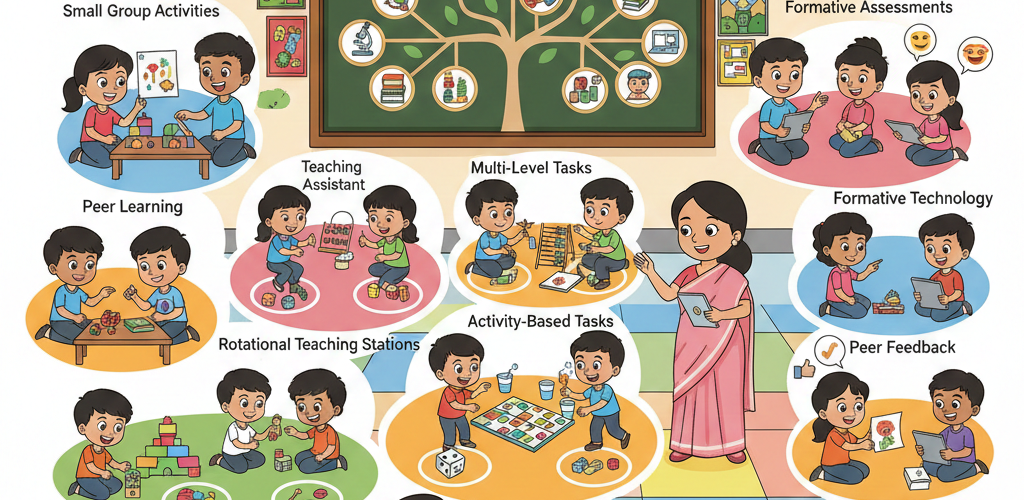
Teaching in a large classroom is never simple. Each student comes with their own pace, background, and way of understanding. Some students grasp new concepts quickly while others may need extra time and attention. Managing this diversity can feel overwhelming, especially when the goal is to ensure every student is learning and growing. Yet, with careful planning and the right strategies, teachers can make a real difference and help every child succeed.
Here are twelve strategies that work well in large classrooms:
1. Small Group Activities
Breaking a classroom into small groups allows students to engage more actively with lessons. It gives teachers the chance to focus on each student individually and provide guidance where it is most needed. Small groups also encourage shy or hesitant students to speak up and participate, creating a more inclusive learning environment.
2. Peer Learning
Learning from each other can be very effective. When students work together and help one another, it strengthens their understanding. Stronger students reinforce what they know, while peers who are struggling gain clarity in a more approachable way. Peer learning also develops collaboration skills and confidence, which are important for lifelong learning.
3. Rotational Teaching Stations
Rotating students through different activity stations keeps the classroom dynamic. Each station can focus on a different aspect of the lesson, such as reading, problem-solving, or hands-on experiments. As students move from one station to another, they experience different ways of learning and remain actively engaged throughout the lesson.
4. Activity-Based Tasks
Activities that involve hands-on work help students connect concepts to real life. In mathematics, for example, using measuring cups or interactive games can make fractions easier to understand. Activity-based learning is especially helpful for students who find traditional lectures difficult to follow. It allows learning to be visual, practical, and memorable.
5. Multi-Level Tasks
Not all students work at the same pace or level. Multi-level tasks allow teachers to provide assignments that vary in difficulty. Advanced students remain challenged, while others can work on tasks that build foundational skills. This approach ensures that every student remains engaged and supported, regardless of their current level of understanding.
6. Teaching Assistants or Volunteers
Extra support in the classroom can make a big difference. Teaching assistants or volunteers can help monitor groups, provide one-on-one guidance, and support students who are struggling. This allows the teacher to focus on planning and delivering lessons effectively while ensuring that no student is left behind.
7. Formative Assessments
Regular checks of student understanding are essential in large classrooms. Formative assessments, such as short quizzes, oral questioning, or exit tickets, help teachers identify learning gaps early. By assessing progress regularly, teachers can adjust lessons in real time to support students who need extra help before gaps widen.
8. Interactive Technology
Technology can help make lessons more engaging and personalized. Educational apps, videos, and online quizzes allow students to learn at their own pace. Technology also helps teachers monitor progress and identify areas where students need additional support. In large classrooms, these tools act as an extension of the teacher, providing students with more opportunities to learn independently.
9. Peer Feedback
Students benefit when they give and receive feedback from one another. Peer feedback builds critical thinking and encourages students to articulate their thoughts clearly. It also gives students a sense of responsibility for their own learning and helps strengthen understanding for both the giver and the receiver of feedback.
10. Flexible Grouping
Changing group compositions regularly helps students interact with different peers. Flexible grouping encourages collaboration with students of varying abilities and backgrounds. This variety prevents monotony, allows students to learn from each other, and ensures a more balanced classroom where everyone can contribute and benefit.
11. Scaffolded Instruction
Breaking down lessons into smaller, manageable steps allows students to succeed one step at a time. Teachers provide support at each stage and gradually reduce assistance as students gain confidence. For example, in a writing lesson, students might start with brainstorming ideas, then move to outlining, drafting, and revising. Scaffolded instruction helps all students achieve success and builds confidence along the way.
12. Reflective Practices
Encouraging students to reflect on their learning helps them become more independent learners. Reflection can involve writing in journals, discussing what was learned, or identifying areas of difficulty. Reflection also gives teachers valuable insight into students’ understanding, helping them adjust lessons to meet individual needs. It encourages students to think about their learning process and take ownership of their progress.
Large classrooms may seem challenging, but they also offer opportunities for innovation and creativity. When teachers use these strategies, they create an environment where every student feels supported and engaged. Students become active participants in their own learning, learning gaps are reduced, and the classroom becomes a place where everyone can grow.
Success in large classrooms does not happen by chance. It requires planning, patience, and a commitment to understanding each student. But with intention and the strategies outlined above, teachers can turn a large classroom into a space where every child has the opportunity to thrive.